


|
Standardized Plant Extract - TITREX® Field HorsetailHorsetail, the Living Fossil for Remineralization |
Latin name Equisetum arvense L. Family Equisetaceae |
|
History & Botany |
250 million years of presence on Earth: a true living fossil
|
Field horsetail is one of the oldest plants on our planet: it populated the forests of the Primary Era over 250 million years ago. A true living fossil, it has barely evolved since the time of the dinosaurs. Today, it is found on all continents of the Northern Hemisphere (Europe, Asia, North America) in damp meadows, ditches, and along waterways. Known since Greek and Roman antiquity, it was used to treat kidneys, wounds, and bones. Medieval herbalists made extensive use of it. Its nickname "scouring rush" comes from its high abrasive silica content, which was used to polish utensils. In modern phytotherapy, it is one of the most prescribed plants in the world for its remineralizing and diuretic properties. |
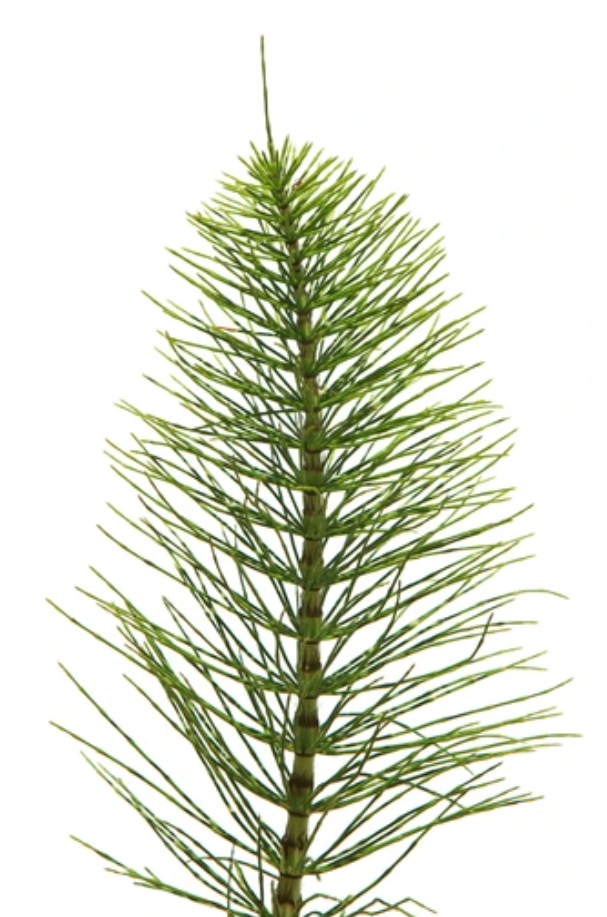
Morphology Perennial plant without flowers or true leaves, reaching 20 to 50 cm in height. Green, jointed stems arranged in whorls, resembling a horse's tail. Produces two types of stems: fertile (spring, brownish, bearing spore cones) and sterile (green, used in phytotherapy). Part used The sterile stems, harvested in summer at optimal maturity. Caution: Do not confuse with marsh horsetail (Equisetum palustre), which is toxic and has leaves and spikes on the same stem. |
Equisetum arvense L. Characteristic sterile stem with horsetail-like whorls |
|
Organoleptic Characteristics |
What the senses reveal about the plant
|
Appearance Green, jointed stems; fine green-gray powder in extract form |
Odor Slight, faintly vegetal and herbal |
Taste Slightly astringent, mildly bitter, with no strong aroma |
Texture Crunchy stems, slightly rough, rich in abrasive silica |
|
Active Principles |
Chemistry in the service of efficacy
| Organic Silica (5 to 8%) | Major constituent and marker for standardization. Essential trace element for collagen synthesis, bone mineralization, and the strength of hair, nails, and connective tissues. |
| Flavonoids | Isoquercetin, kaempferol, luteolin. Antioxidant, anti-inflammatory, and vascular protective properties confirmed in in vitro studies. |
| Saponins (equisetonin) | Contribute to the diuretic action and facilitate mineral absorption. |
| Minerals & Trace Elements | Calcium, potassium, magnesium, iron, manganese, phosphorus. Exceptional mineral profile supporting bone remineralization and hydroelectrolytic balance. |
|
Medicinal Properties & Traditional Use |
One of the most prescribed plants in Europe
|
Remineralizing & Osteoprotective Organic silica stimulates collagen synthesis and promotes calcium fixation. Essential for supporting bones, cartilage, tendons, and ligaments. Recommended for osteoporosis, fractures, and demineralization. |
Diuretic & Detoxifying Promotes renal elimination of water and nitrogenous waste. Traditionally used for cystitis, kidney stones, water retention, gout, and inflammatory rheumatic conditions. |
Beauty & Connective Tissues Silica strengthens hair, nails, and skin. Stimulates skin elasticity and healing. Traditionally recognized for use in cases of hair loss and brittle nails. |
| Field horsetail is listed in the European Pharmacopoeia and recognized as a natural source of bioavailable organic silica. |
TITREX® products are dietary supplements and not medicines. They should not replace a healthy and balanced diet.