


|
Standardised plant extract - TITREX® Red Vine LeafThe guardian of the venous system: chronic venous insufficiency, heavy legs and circulation |
Latin name Vitis vinifera L. Family Vitaceae |
|
History & Botany |
From a vine cultivated since Antiquity to the phytotherapy laboratory
|
The red vine (Vitis vinifera) is one of humanity's oldest cultivated plants, present for over 6,000 years in Asia Minor and the Mediterranean basin. While viticulture has made it famous for its fruit and wine, it is an entirely different part of the plant that interests modern phytotherapy: its autumn leaves, which become loaded with anthocyanins and polyphenols during the colour change, forming a remarkable concentrate of venotonic active compounds. Hippocrates and Dioscorides already described the haemostatic and anti-inflammatory properties of vine leaves. European folk medicine used them as poultices for heavy legs and varicose veins. Modern research has isolated and validated oligomeric proanthocyanidins (OPCs) and anthocyanins as the main compounds responsible for the venotonic and vascular-protective action, making red vine one of the best-documented plants in natural phlebology. |
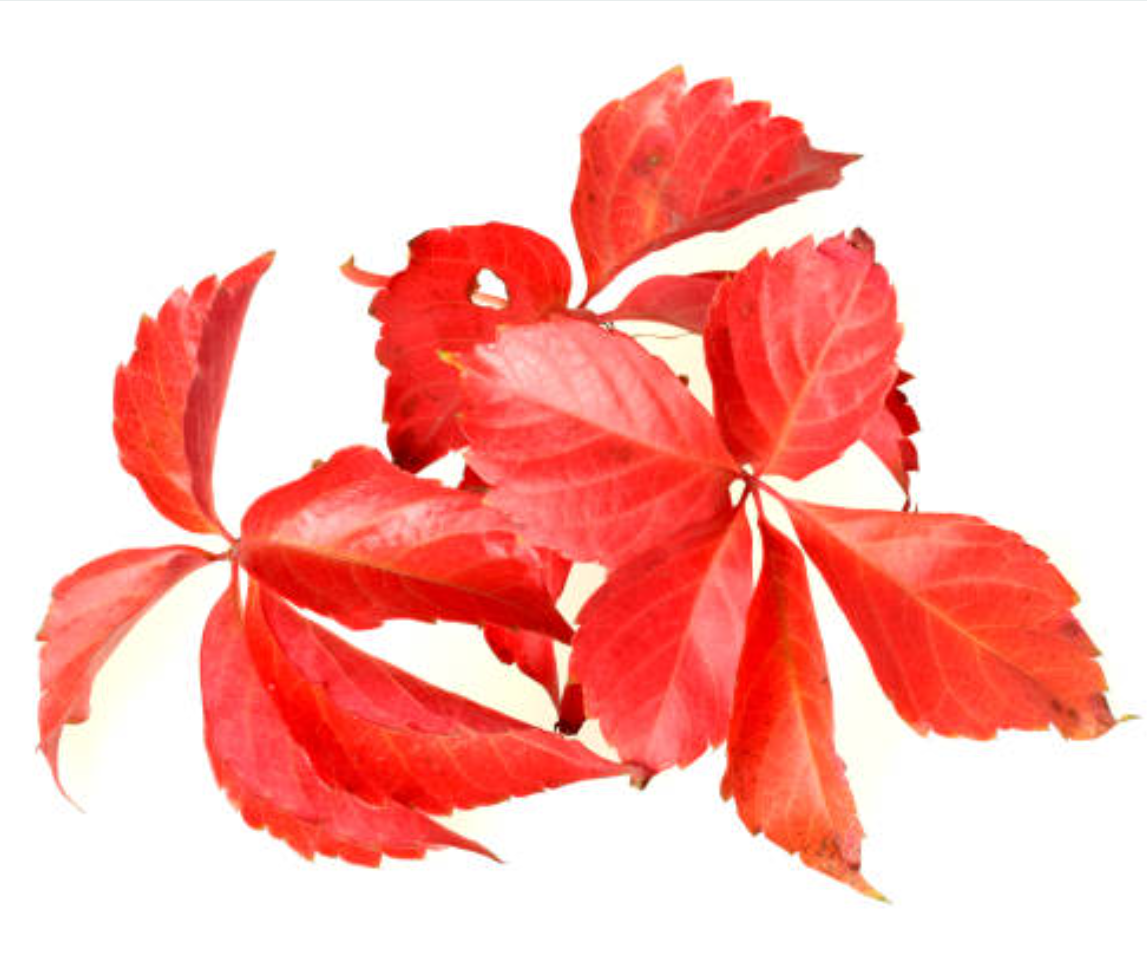
Morphology Climbing woody liana with palmate 5-lobed leaves, toothed, green in summer and turning bright red to deep purple in autumn due to the accumulation of anthocyanins. Tendrils opposite the leaves. Tiny flowers in clusters, producing the well-known grapes. Part used & extraction The autumn red leaves, harvested in autumn at peak colouration, dried and subjected to hydro-alcoholic extraction. The extract is standardised for total flavonoids and anthocyanins. Vineyards mainly from Southern Europe (France, Italy, Spain). |
Vitis vinifera L. - autumn leaves at their characteristic red-purple peak |
|
Active compounds & biochemistry |
Anthocyanins, OPCs and flavonoids: a polyphenolic triad in the service of the venous system
| Anthocyanins (cyanidin, delphinidin) | Standardisation markers and characteristic pigments. Strengthen the walls of capillaries and venules, reduce their permeability and fragility. Powerful antioxidants neutralising free radicals responsible for vascular ageing. Responsible for the red autumn colouration of the leaves. |
| OPCs — Oligomeric Proanthocyanidins | Inhibit enzymes that degrade vascular collagen (collagenase, elastase, hyaluronidase). Maintain the structural integrity of the venous and capillary wall, improve venous tone and reduce perivascular oedema. |
| Flavonoids (quercetin, kaempferol, isoquercitrin) | Vascular anti-inflammatory action, inhibition of platelet aggregation and endothelial protection. Reduce the production of pro-inflammatory mediators involved in pathological venous dilation. |
| Tannins & resveratrol | Condensed tannins reinforce the astringent and vasoconstrictive action. Resveratrol, a well-documented stilbene phytoalexin, exerts a complementary cardioprotective, anti-aggregant and anti-inflammatory action. |
|
Organoleptic properties |
Sensory characteristics of the dried plant and extract : identification and quality benchmarks
|
Appearance Dried plant Leaves bright red to deep purple, palmate-lobed, slightly leathery when dried. Prominent veins, characteristic toothed edges. |
Colour Dry extract / liquid Powder red-brown to bordeaux. Liquid extract: deep red-violet, highly pigmented, characteristic of anthocyanins. |
Odour Dried plant & extract Discreet to moderate. Slightly fruity, vegetal notes reminiscent of fresh vine leaf. Faint characteristic tannic undertone. |
Taste Extract in solution Distinctly astringent and slightly bitter, with a lingering fruity note. Characteristic mouth-puckering sensation typical of tannins and OPCs. |
Solubility Dry extract Fine powder, very soluble in hydro-alcoholic medium. Soluble in hot water. Highly pigmenting: permanently stains surfaces. |
|
Medicinal properties & traditional use |
The phytotherapy reference for chronic venous insufficiency
|
Chronic venous insufficiency Anthocyanins and OPCs strengthen venous wall tone, reduce capillary permeability and improve venous return. Clinically documented efficacy on the symptoms of chronic venous insufficiency. |
Heavy legs & oedema Reduces the sensation of heavy legs, swelling and oedema of the lower limbs. Improves microcirculation and reduces venous stasis. Particularly indicated during summer heat and prolonged standing. |
Varicose veins & capillary fragility Slows the progression of varicose veins by strengthening the venous wall. Reduces capillary fragility and spontaneous bruising. Indicated in prevention and as support for conventional varicose vein treatments. |
Vascular & antioxidant protection OPCs and resveratrol protect the vascular endothelium from oxidative stress. Mild cardioprotective and anti-platelet aggregation action, contributing to overall cardiovascular health. |
| Red vine leaf is recognised by the German Commission E and referenced in clinical phytotherapy for the treatment of symptoms of chronic venous insufficiency, including heavy legs and oedema of the lower limbs. |
TITREX® products are food supplements and not medicines. They should not be used as a substitute for a varied and balanced diet.