


|
Standardized Plant Extract — TITREX® GinsengRoot of Life — The adaptogenic panacea of Oriental medicine |
Latin name Panax ginseng C.A. Meyer Family Araliaceae |
|
History & Botany |
5,000 years of medicine — the most studied and revered plant in the world
|
Ginseng is the most studied medicinal plant in the world. Its Latin name, Panax, comes from the Greek pan (all) and akos (remedy — panacea), a testament to its universal reputation. In Chinese, the term means "man-plant," referring to the anthropomorphic shape of its root. Archaeological research traces its use back to the Paleolithic period, around 60,000 years ago. Reserved for emperors and great lords due to its rarity and power, it is described in Shennong’s Herbal Classic (200 AD) as a tonic for "Qi," the vital energy. Introduced to Europe in the 17th century, it is now primarily produced in Korea, China, and Canada. Its cultivation requires rare patience: a minimum of 6 years of growth under shade, in rich and well-drained soil, before harvesting — which explains its high price and the need to choose certified standardized extracts. |
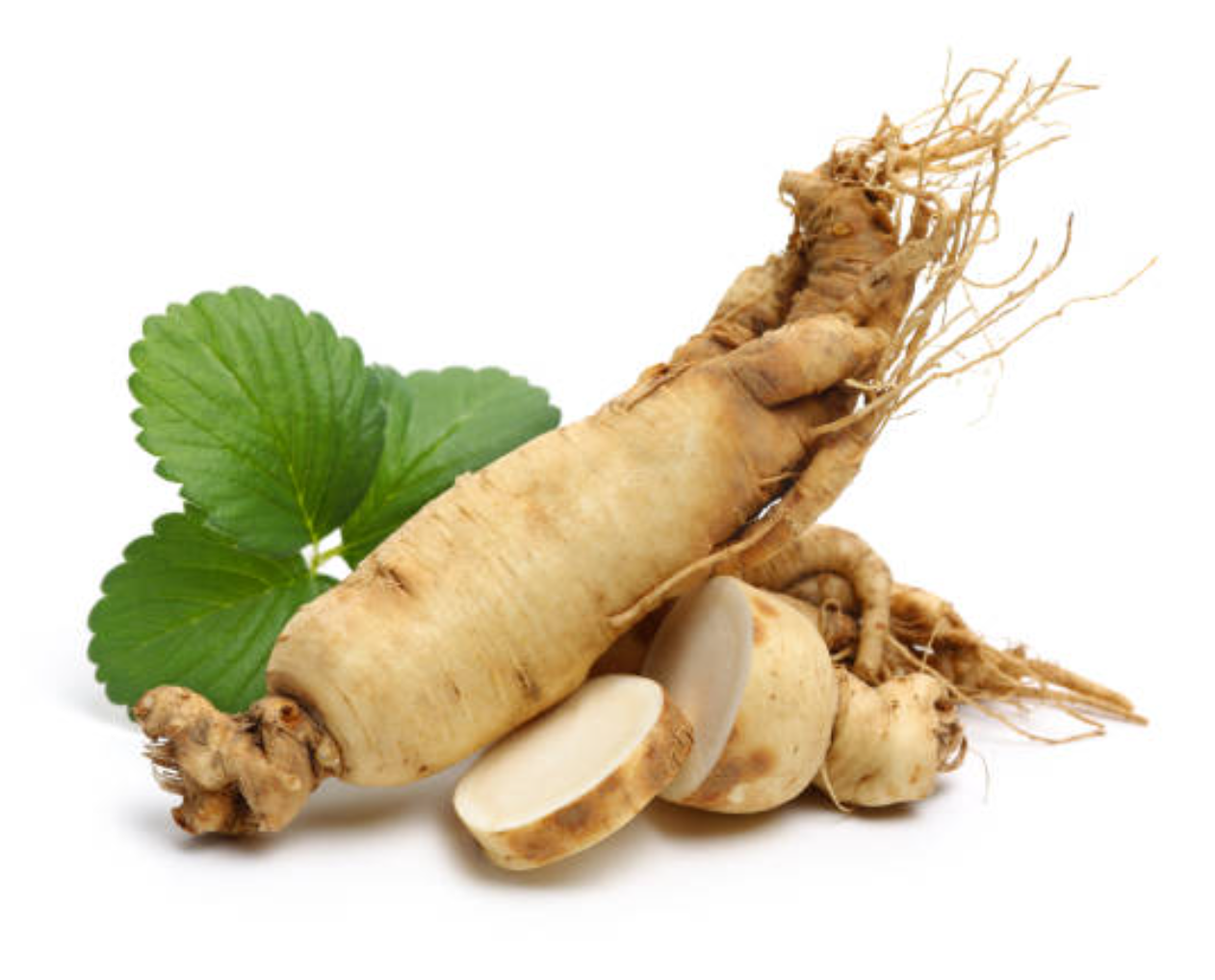
Morphology Perennial plant, 30 to 60 cm tall, with characteristic palmate leaves arranged in whorls. Small white flowers in umbels, and scarlet red berries in summer. The main root is fleshy and branched, often anthropomorphic, with a wrinkled yellowish-beige skin. White ginseng = cleaned and dried root; Red ginseng = steamed before drying (richer in Rg ginsenosides, more stimulating). Part used & extraction The main root, harvested after 6 to 8 years of cultivation. The dry extract is standardized in total ginsenosides (minimum 7%), sometimes up to 20-25% for highly concentrated extracts. HPLC titration is essential to guarantee efficacy. |
Panax ginseng C.A. Meyer Fleshy, branched root, sometimes anthropomorphic, and characteristic scarlet red berries |
|
Organoleptic Characteristics |
What the senses reveal about the plant
|
Appearance Very wrinkled root, yellowish-beige (white ginseng) or reddish-brown mottled (red ginseng). Powder ranges from ochre-brown to grayish-brown depending on the process. |
Odor Characteristic and recognizable: slightly musky, earthy, and gently sweet. Red ginseng develops warmer, caramelized notes due to steaming. |
Taste Initially slightly sweet, then bitter, aromatic, slightly pungent, and persistent. Red ginseng is more pronounced and warmer. Bitterness is a sign of richness in ginsenosides. |
Texture Fibrous, dense, and woody when dry. Fine powder, slightly hygroscopic, to be stored away from moisture. Good hydroalcoholic solubility. |
|
Active Principles & Biochemistry |
Over 50 ginsenosides identified: Unique chemistry serving the most complex adaptogen in the world
| Ginsenosides (panaxosides) (50+ varieties, min. 7%) | Signature triterpene saponins, standardization markers. Rg1 (CNS stimulant, memory, physical performance) and Rb1 (calming, anti-stress, cardioprotective) are the two main ginsenosides with complementary and paradoxical effects, forming the basis of bidirectional adaptogenic action: stimulating when the body is exhausted, calming when it is overstimulated. |
| Acidic polysaccharides (panaxans) | The most abundant components of the root after reserve glucides. Powerful immunostimulants: stimulate macrophages, NK lymphocytes, and interferon production. Antitumor activity under study. Documented hypoglycemic properties (panaxans A to U). |
| Essential amino acids & vitamins | Complete profile of amino acids, including arginine (precursor of vasodilatory NO) and glutamine (neuroprotective). Vitamins B1, B2, B3, B5, B6, B12, C, and E. Minerals: calcium, iron, organic germanium (immunostimulant), manganese, zinc, phosphorus, selenium. |
| Enzymes, choline & phytosterols | Amylase, invertase, phenolase. Neuroprotective choline (precursor of acetylcholine, memory neurotransmitter). Beta-sitosterol and stigmasterol with mild anti-inflammatory and hypocholesterolemic properties. Minor essential oil contributing to the characteristic aroma. |
|
Medicinal Properties & Traditional Use |
Recognized by the WHO as the global reference adaptogen
|
Adaptogen & Anti-Stress Helps the body adapt to physical, psychological, and environmental stress. Regulates cortisol and normalizes the functions of the HPA (hypothalamic-pituitary-adrenal) axis. Stimulating effect in case of fatigue, calming effect in case of overstimulation — a bidirectional action characteristic of true adaptogens. |
Cognitive & Physical Stimulant Improves physical and intellectual performance, concentration, and working memory. Increases resistance to fatigue and stimulates adrenaline secretion. Recognized by the WHO for its effects on performance in cases of fatigue or chronic exhaustion. |
Immunostimulant & Antioxidant Stimulates NK lymphocytes, macrophages, and interferon production. Strong antioxidant power of ginsenosides (protection of cells against oxidative stress). Cardioprotective properties (regulation of blood pressure and platelet aggregation). |
Vitality & Longevity Traditional millennia-old use to support sexual vitality (documented improvement of erectile dysfunction), prevent premature aging, and strengthen the body's overall resistance. Ginsenoside Rb1 protects neurons against degeneration. |
| Usage note: Standardized extracts with a minimum of 7% ginsenosides, 200 mg 1 to 3 times per day. Cures of 4 to 8 weeks with a 2-week break. Not recommended in the evening (stimulating effect may disrupt sleep). Contraindicated in cases of uncontrolled high blood pressure, severe insomnia, or anticoagulant treatment. Caution with MAO inhibitors or antidiabetic treatments (possible potentiation). |
| The WHO recognizes the use of ginseng as a tonic to improve physical and mental capacity during fatigue and weakness — making it the only adaptogen to benefit from global official recognition for this purpose. |
TITREX® products are dietary supplements and not medicines. They should not replace a healthy and balanced diet.