


|
Standardized Plant Extract - TITREX® Devil's ClawThe Devil's Claw: Reference joint anti-inflammatory, analgesic, and digestive |
Latin name Harpagophytum procumbens DC. Family Pedaliaceae |
|
History & Botany |
From the sands of the Kalahari to European laboratories: The African plant with formidable hooks, now a global reference in natural rheumatology
|
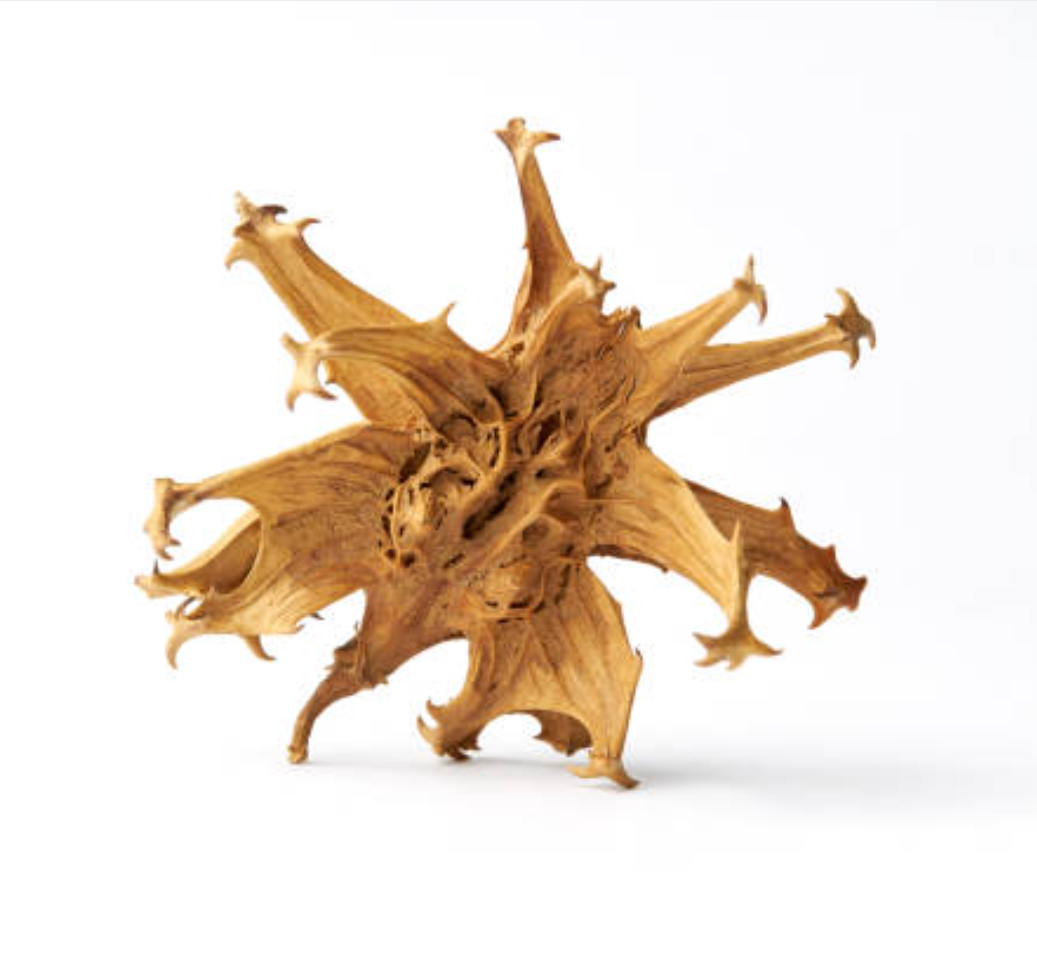
Devil's Claw is a creeping perennial plant native to the semi-desert regions of Southern Africa (Namibia, Botswana, South Africa), where it thrives in the sands of the Kalahari Desert. Its botanical name comes from the Greek harpagos, meaning "hook," a direct reference to its woody fruits, covered with sharp hooks capable of injuring and immobilizing animals that tread on them. The nickname "Devil's Claw" perfectly illustrates the formidable morphology of its capsules. Used for centuries by the San and Khoi peoples of Southern Africa to treat fevers, joint pain, digestive disorders, and skin wounds, the plant was introduced to Western medicine in 1904 by a German doctor settled in Namibia. The first scientific studies began in the 1950s, and large-scale exportation started in 1962. Since then, Devil's Claw has become one of the most studied and prescribed medicinal plants in the world for ostearticular conditions, with over 400 clinical and preclinical studies dedicated to it. It is recognized by the EMA, WHO, and ESCOP. |
Morphology Creeping perennial plant with stems spreading on the ground, bearing fleshy leaves and rose-violet tubular flowers that are highly decorative. Its formidable fruits are woody capsules equipped with rigid, curved hooks that cling to the skin, wool, or leather of any passing animal, thus ensuring seed dispersal. Part used & extraction The secondary roots (tubercles), fleshy and rich in active principles, are harvested in autumn after flowering. They are dried and then subjected to hydro-alcoholic extraction. The dry extract is standardized in harpagoside (minimum 1.2 to 3%). Harvesting is exclusively done in Namibia, Botswana, and South Africa, under sustainable exploitation quota control. |
Harpagophytum procumbens DC. Fruit covered with sharp hooks and root tubercles |
|
Active Principles & Biochemistry |
Harpagoside, anti-inflammatory iridoids: Molecules that rival NSAIDs without their gastric toxicity
| Harpagoside (iridoids, 1.2 to 3%) | Signature molecules and standardization markers. Glycosylated iridoids exclusive to Devil's Claw. Powerfully inhibit the synthesis of prostaglandins (COX-1, COX-2) and leukotrienes (LOX), central mediators of joint inflammation. Reduce NF-kB, the master pathway of chronic inflammation. Clinically comparable anti-inflammatory efficacy to certain NSAIDs at equivalent doses, without gastric toxicity. |
| Harpagide & procumbide | Complementary iridoids with confirmed anti-inflammatory, analgesic, and antioxidant properties. Harpagide exerts a synergistic effect with harpagoside, increasing the overall anti-inflammatory activity of the extract. Contributes to the documented central analgesic effect. |
| Phenylpropanoids & phenolic acids | Cinnamic acid, caffeic acid, and their derivatives. Contribute to the overall anti-inflammatory effect, antioxidant activity (neutralization of joint free radicals), and protection of cartilage against oxidative degradation. |
| Sugars & bitter principles | Stachyose (tetrasaccharide) and other structural carbohydrates of the tubercles. Bitter principles responsible for digestive and biliary stimulation. The intense bitterness of harpagoside is a characteristic of quality: A good harpagoside-rich extract is always very bitter. |
|
Organoleptic Properties |
Sensory characteristics of the dry tubercle and extract : identification and quality benchmarks
|
Appearance Dry tubercle Tubercle light brown to dark brown, fleshy and fibrous when fresh. Powder: light brown to ochre brown, fine, slightly granular. |
Color Dry extract / liquid Powder: orange-brown to dark brown. Liquid extract: reddish-brown to amber-brown, translucent to slightly cloudy depending on concentration. |
Odor Dry tubercle & extract Mild to moderate. Earthy and slightly sweet notes, characteristic of tropical roots. Slightly dry and dusty in powder form. |
Taste Extract in solution Very bitter and slightly acrid, characteristic exclusive to iridoids (harpagoside). The intensity of the bitterness is a direct marker of the richness in active principles: the more bitter the extract, the more concentrated it is. |
Solubility Dry extract Fine powder, good solubility in hydroalcoholic solutions and hot water. Harpagoside is water-soluble. Slightly hygroscopic; store away from moisture. |
|
Medicinal Properties & Traditional Use |
Recognized by the EMA, WHO, and ESCOP: The best-validated anti-inflammatory joint plant in phytotherapy
|
Anti-inflammatory & Analgesic Core action of the plant. Harpagoside inhibits COX-1, COX-2, and LOX, reducing joint pain, heat, and swelling. Clinically proven efficacy comparable to NSAIDs in several randomized trials (knee osteoarthritis, chronic low back pain). No gastric side effects at recommended doses. |
Osteoarthritis & Rheumatism Traditional use validated by the EMA for minor joint pain: knee osteoarthritis, hip osteoarthritis, hand osteoarthritis, mild polyarthritis, chronic cervical and dorsal pain. Improves joint mobility and reduces morning stiffness after 4 to 8 weeks of treatment. |
Low Back Pain & Muscle Pain One of the best-documented indications. Several meta-analyses confirm the efficacy of Devil's Claw in non-specific chronic low back pain, with significant pain reduction and improved quality of life comparable to some conventional treatments. |
Digestive Tone & Appetite The pronounced bitterness of iridoids stimulates digestive and biliary secretions. Recognized by ESCOP for improving appetite, reducing bloating, and flatulence. Traditional use as a general digestive tonic in Southern Africa. |
|
Cartilage protection: A major yet underrecognized asset: Beyond its purely symptomatic effect (pain, inflammation), Devil's Claw has a fundamental impact on joint cartilage biology: ‣ Inhibition of matrix metalloproteinases (MMP): Harpagoside reduces the expression of MMP-3 and MMP-13, enzymes responsible for the degradation of type II collagen and proteoglycans in joint cartilage. By slowing this enzymatic destruction, they help slow the progression of osteoarthritis. ‣ Protection of chondrocytes: Devil's Claw protects cartilage cells (chondrocytes) against apoptosis induced by inflammation and oxidative stress, thus preserving long-term cartilage capital. ‣ Reduction of joint oxidative stress: Phenylpropanoids and flavonoids neutralize free radicals produced locally in the inflamed joint, reducing oxidative damage to cartilage, synovium, and synovial fluid. |
| Usage note: Dose-dependent efficacy: standardized extracts with a minimum of 1.2% harpagoside are required for clinical efficacy (recommended daily dose: 50 to 100 mg of harpagoside). Onset of action: 4 to 8 weeks. Contraindicated in cases of active gastroduodenal ulcer (stimulation of secretions). Not recommended during pregnancy and breastfeeding. Possible interactions with anticoagulants and hypoglycemic agents: consult a doctor. Do not combine with NSAIDs without medical advice. Well tolerated in renewable 3-month courses. |
| The European Medicines Agency (EMA), WHO, and ESCOP recognize the well-established traditional use of Devil's Claw root for relieving minor joint pain and digestive disorders. With over 400 scientific and clinical studies, it is the best-validated anti-inflammatory joint plant in modern phytotherapy. |
TITREX® products are dietary supplements and not medicines. They should not replace a healthy and balanced diet.