


|
Plant extract - Phytotherapy Horse ChestnutThe chestnut tree bark: Anti-oedematous, venotonic and vascular anti-inflammatory |
Latin name Aesculus hippocastanum L. Family Sapindaceae |
|
History & Botany |
From the Balkans to the avenues of Europe: the great chestnut tree, ornamental tree and major medicinal plant
|
Horse chestnut is native to the Balkans and the Caucasus, where it grows naturally in mountain forests. Introduced to Western Europe in the 16th century for ornamental purposes, it rapidly spread through avenues and public gardens. Its misleading "Indian" name stems from a historical confusion among the first Ottoman botanists. Balkan populations had known of its medicinal properties for centuries: bark and dried seeds were used to treat rheumatism, coughs and circulatory disorders. Aescin, the major active compound, was isolated and characterised in the 20th century: it is one of the first phytomedicines to have benefited from controlled clinical studies on venous insufficiency. Today, horse chestnut extract standardised for aescin is one of the most prescribed and best-studied plant venotonics in Europe, particularly in Germany where it is classified as a medicinal product. |
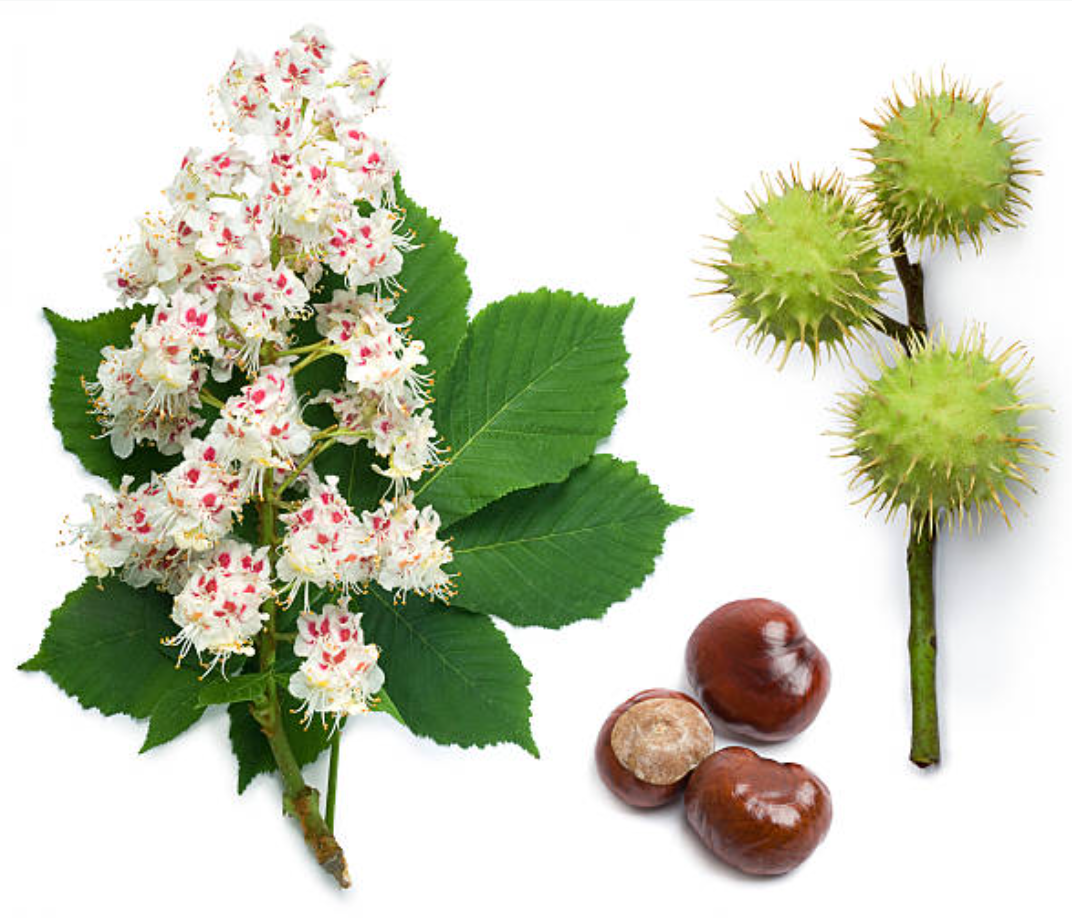
Morphology Large deciduous tree reaching 25 to 35 metres. Palmate leaves composed of 5 to 7 large characteristic leaflets. White or pink flowers in upright, highly decorative panicles in spring. Fruits: green spiny husks containing 1 to 3 shiny brown seeds (conkers), not to be confused with edible chestnuts. Part used & extraction The seed (kernel) and bark, by hydro-alcoholic extraction. The dry extract is standardised for total aescin (minimum 16 to 20%). The raw seed is orally toxic: only standardised extracts are used in phytotherapy. |
Aesculus hippocastanum L. Characteristic shiny brown seeds and spiny husks |
|
Active compounds & biochemistry |
Aescin, an exceptional triterpene saponin: one of the most powerful natural anti-oedematous agents
| Aescin (16 to 21%) | Triterpene saponin, major active compound. Reduces permeability of capillaries and post-capillary venules, strengthens the venous wall and inhibits lysosomal enzymes (hyaluronidase, elastase) responsible for degradation of the vascular connective matrix. Powerful and clinically documented anti-oedematous effect. |
| Flavonoids | Quercetin, kaempferol and their glycosides. Complementary antioxidant properties, protective of the vascular endothelium. Potentiate the action of aescin through a synergistic effect on capillary resistance. |
| Coumarin glycosides | Aesculin and fraxin. Anti-inflammatory and mildly anti-platelet aggregation properties. Reinforce the overall vasculoprotective action of the extract. |
| Tannins | Local astringent and vasoconstrictive properties. Contribute to reducing pathological venous dilation and improving venous return. |
|
Organoleptic properties |
Sensory characteristics of the dried seed and extract — identification and quality benchmarks
|
Appearance Dried seed Seeds shiny mahogany brown, ovoid, heavy. Seed powder beige to light brown, fine and slightly granular. |
Colour Dry extract / liquid Powder beige-brown to ochre-brown. Liquid extract: amber to red-brown, translucent, slightly foaming when shaken (saponins). |
Odour Dried seed & extract Weak to moderate. Woody and slightly tannic notes, reminiscent of fresh bark. Slightly acrid at high concentration. |
Taste Extract in solution Bitter, acrid and astringent, with a slightly pungent note typical of saponins. Persistent and slightly irritating aftertaste at high doses. |
Solubility Dry extract Fine powder, good solubility in hydro-alcoholic medium and hot water. Saponins confer a strong characteristic foaming effect in agitated aqueous solution. |
|
Medicinal properties & traditional use |
Clinically proven efficacy on venous insufficiency: reference medicinal product in Germany
|
Powerful anti-oedematous Reduces venous oedema of the lower limbs. Efficacy comparable to elastic compression in several randomised clinical studies. Rapid action on swollen ankles and feet. |
Chronic venous insufficiency Improves CVI symptoms: heavy legs, pain, nocturnal cramps, itching and limb fatigue. Recognised by the German Commission E and the EMA as a treatment for mild to moderate CVI. |
Haemorrhoids & varicose veins Reduces haemorrhoidal inflammation, pain and bleeding. Improves varicose vein tone and slows their progression. Used orally and topically (gels, creams). |
Vascular anti-inflammatory Inhibits vascular inflammatory mediators (prostaglandins, cytokines). Protects the capillary wall against oxidative damage. Useful in the prevention of bruising and capillary fragility. |
| Usage note: Use exclusively standardised extracts — the raw seed is toxic. Not recommended during pregnancy, breastfeeding, or in cases of severe renal or hepatic insufficiency. Potential interactions with anticoagulants and antiplatelet agents. Do not exceed recommended doses. |
| A meta-analysis of 17 controlled clinical studies confirms that horse chestnut extract standardised for aescin significantly reduces oedema and the symptoms of chronic venous insufficiency, with an excellent tolerability profile. |
Plant extracts are concentrated products. Consult a healthcare professional before use, especially during pregnancy, breastfeeding, medication or chronic illness.