


|
Plant Extract - Phytotherapy & Nutrition Green TeaThe Orient's elixir of longevity: Major antioxidant, fat burner, and cardioprotective |
Latin name Camellia sinensis (L.) Kuntze Family Theaceae |
|
History & Botany |
From Imperial China to nutraceutical laboratories: Five millennia of a sacred drink turned medicine
|
The tea plant is native to the China-India-Myanmar triangle, where it grows wild in humid mountain forests. Chinese legend attributes the discovery of tea to Emperor Shennong around 2737 BCE. For millennia, tea consumption was reserved for imperial courts and Buddhist monks. Green tea, unfermented, is the oldest and most active form: the leaves are simply steamed (Japanese method) or pan-fried (Chinese method) to preserve polyphenols without oxidation. Introduced to Europe in the 16th century by Portuguese and Dutch merchants, modern scientific research revealed in the 1980s the exceptional richness of green tea in catechins (especially EGCG), sparking a wave of studies on its antioxidant, anticancer, cardioprotective, and metabolic effects. Today, standardized green tea extract is one of the most studied phytonutrients in the world, with thousands of scientific publications. |
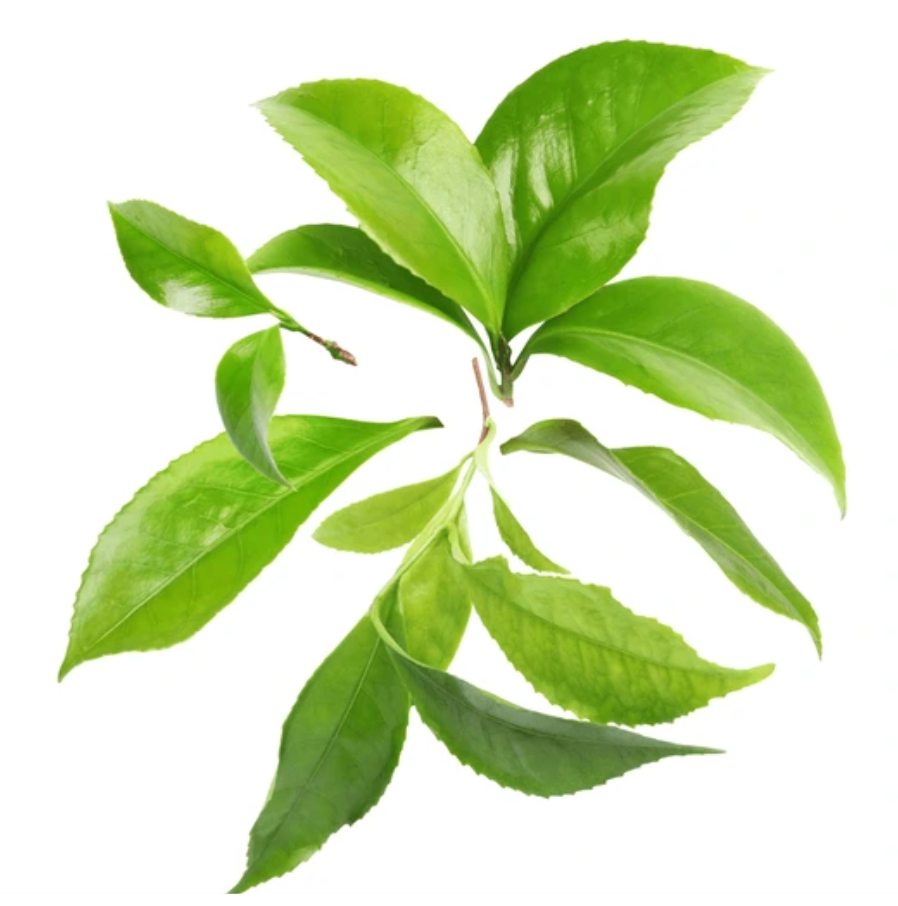
Morphology Evergreen shrub or small tree, 1 to 10 meters tall (pruned to 60-90 cm in cultivation). Alternate, elliptical, leathery, glossy leaves with serrated edges and prominent veins. Solitary, highly fragrant white flowers in autumn. The tea plant can live for several centuries; old plants produce the highest quality teas. Part used & extraction The young leaves and buds, harvested in spring, dried without fermentation, and subjected to hydro-alcoholic extraction. The dry extract is standardized in total polyphenols (minimum 45 to 98%) and EGCG. Main origins: China, Japan, India (Darjeeling). |
Camellia sinensis (L.) Kuntze Characteristic young leaves and buds |
|
Active Principles & Biochemistry |
Catechins (especially EGCG) among the most powerful natural antioxidants known
| EGCG: Epigallocatechin gallate (50 to 70% of catechins) | Signature catechin and key molecule of green tea. Powerful antioxidant (ORAC value higher than vitamins E and C). Inhibits tumor cell proliferation via multiple pathways (NF-kB, VEGF, apoptosis). Promotes thermogenesis and fatty acid oxidation. Subject of over 2,000 scientific studies. |
| Total catechins (EGC, ECG, EC) | Epigallocatechin, epicatechin gallate, and epicatechin. Antioxidant, anti-inflammatory, antimicrobial, and antiviral properties complementary to EGCG. Reduce LDL oxidation and protect vascular endothelium. |
| Caffeine & theophylline | Stimulant methylxanthines for the CNS and basal metabolism. Caffeine in green tea is released more slowly due to L-theanine, producing a gentle and prolonged stimulation without peaks or crashes. Thermogenic effect synergistic with catechins. |
| L-theanine & flavonoids | L-theanine (an amino acid unique to tea) modulates the effect of caffeine, promotes relaxation without drowsiness, and improves concentration. Quercetin, kaempferol, and rutin with complementary antioxidant and vasculoprotective properties. |
|
Organoleptic Properties |
Sensory characteristics of the dry leaf and extract — identification and quality benchmarks
|
Appearance Dry leaf Leaves are bright green to dark green, rolled or flattened depending on the process. Powder is intense green, highly coloring, characteristic of non-oxidation. |
Color Dry extract / liquid Powder is green-brown to khaki-brown. Liquid extract: yellow-brown to amber-brown, translucent. Infusion: green-yellow to golden yellow. |
Odor Dry leaf & extract Fresh, herbal, and vegetal, with notes of green hay, slightly marine and floral. Absence of fermented notes (unlike black tea). |
Taste Extract in solution Slightly bitter and astringent, with fresh vegetal notes and a slight umami. Mild and persistent aftertaste. The higher the EGCG concentration, the more pronounced the bitterness. |
Solubility Dry extract Fine powder, excellent solubility in hot water and hydro-alcoholic solutions. Catechins are water-soluble. Slightly hygroscopic; store away from moisture. |
|
Medicinal Properties & Traditional Use |
Reference antioxidant, weight loss ally, and cardiovascular protector, one of the most studied phytonutrients in the world
|
Antioxidant & Cellular Anti-Aging EGCG neutralizes free radicals with an efficiency 25 to 100 times greater than vitamin C. Protects DNA, mitochondria, and cell membranes from oxidative stress. Associated with the prevention of premature aging and degenerative diseases. |
Weight Loss & Thermogenesis Increases basal energy expenditure by 4 to 8% and promotes fat oxidation, especially during physical exercise. Inhibits pancreatic lipase, reducing dietary fat absorption. Documented mild appetite-suppressant effect. |
Cardioprotective & Hypoglycemic Reduces oxidized LDL cholesterol, improves endothelial function, and lowers blood pressure. Improves insulin sensitivity and reduces postprandial glycemia. Populations consuming green tea show a lower incidence of cardiovascular diseases. |
Neuroprotective & Anti-Inflammatory Crosses the blood-brain barrier and protects neurons from oxidative stress. Associated with a reduced risk of neurodegenerative diseases (Alzheimer's, Parkinson's). Inhibits NF-kB and COX-2 pathways of systemic inflammation. |
| Usage note: Prefer decaffeinated extracts for evening use or for people sensitive to caffeine. Contraindicated in cases of iron-deficiency anemia (tannins chelate iron: take away from meals). Not recommended for people on anticoagulants. Avoid excessive doses (hepatotoxicity reported at very high doses in rare cases). Pregnancy and breastfeeding: limit total caffeine intake. |
| Epidemiological studies conducted in Japan on cohorts of hundreds of thousands of people show that regular green tea consumption is associated with a significant reduction in cardiovascular and all-cause mortality. |
Plant extracts are concentrated products. Consult a healthcare professional before use, especially in cases of pregnancy, breastfeeding, medication, or chronic illness.