


|
Standardized Plant Extract - TITREX® EleutheroSiberian Ginseng: Taiga root, adaptogen for extreme conditions |
Latin name Eleutherococcus senticosus (Rupr. & Maxim.) Maxim. Family Araliaceae |
|
History & Botany |
From Siberian forests to Soviet cosmonauts: The adaptogen for extreme cold and conditions
|
Eleuthero grows in the mixed and mountainous forests of the Far East (Siberia, Northern China, Korea, Japan) in some of the harshest climatic conditions on the planet. It is precisely this adaptation to extremes that forges its medicinal properties: the low winter temperatures stimulate the synthesis of its active compounds in the roots. Siberian hunters chewed the root before their long expeditions; Chinese soldiers used it to increase their strength and endurance in combat. In 1947, Russian toxicologist Nikolai Lazarev created the concept of an adaptogen in part thanks to Eleuthero. In the 1950s-1960s, Soviet researchers subjected it to intensive studies: it was administered to Olympic athletes, cosmonauts, and submarine divers to enhance their performance under extreme conditions. More than 1,000 scientific studies have been dedicated to it. Listed in the Russian and Chinese pharmacopoeias, it is one of the best-documented medicinal plants in the world. |
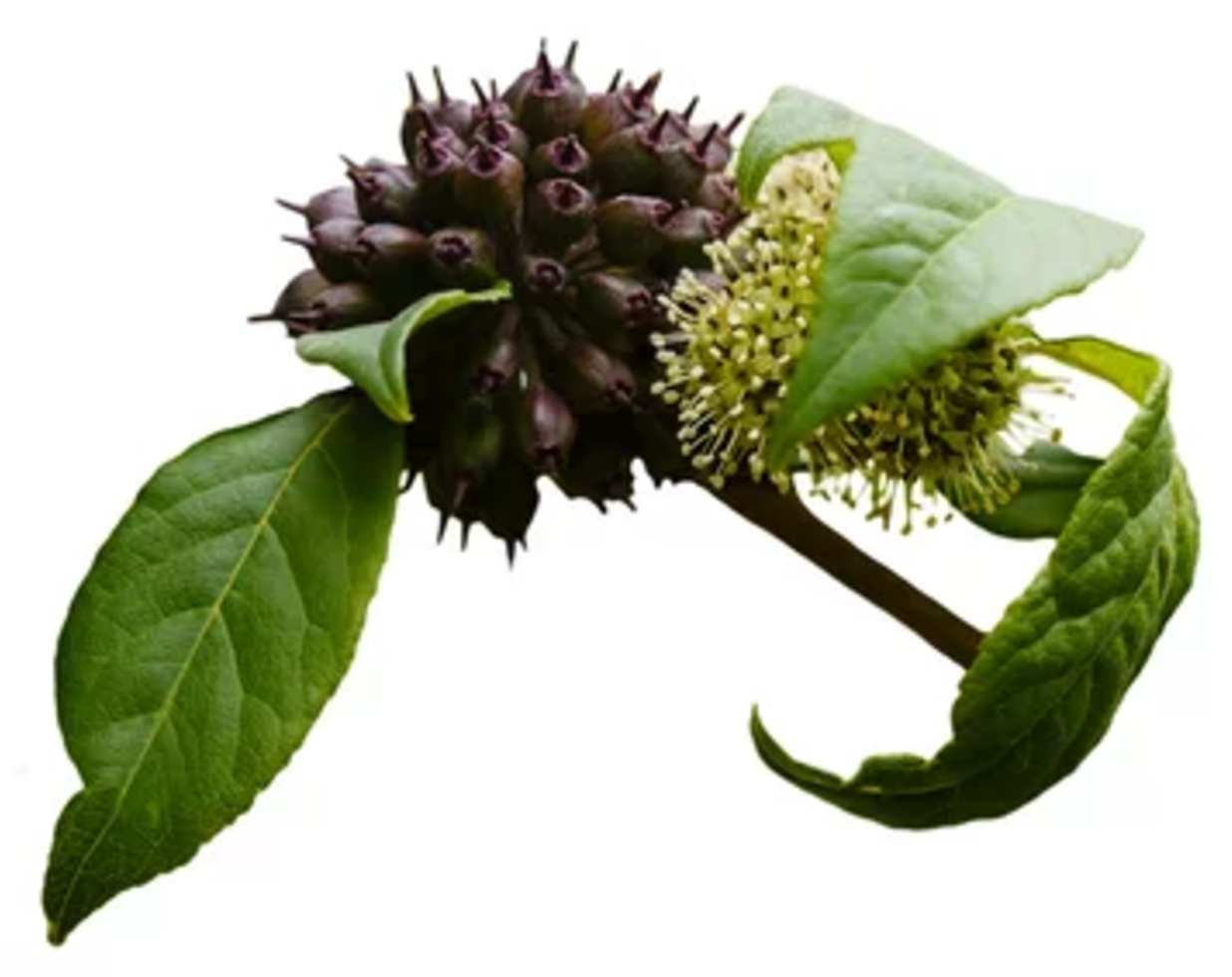
Morphology Thorny shrub, 2 to 3 meters tall, with stems covered in fine, slanted thorns. Palmate leaves with 5 toothed leaflets, bright green in season. Flowers in yellow and purple umbels. Persistent black berries resembling ivy, same Araliaceae family as Korean ginseng. Part used & extraction The root and root bark, harvested in autumn from plants at least 3 to 4 years old. Dried and then subjected to hydro-alcoholic extraction. The dry extract is standardized in eleutherosides B and E (minimum 0.8%). Mainly harvested in Eastern Siberia, Northern China, and Korea. |
Eleutherococcus senticosus Thorny stems and characteristic black berries of the taiga |
|
Active Principles & Biochemistry |
Eleutherosides: Unique glycosides with scientifically validated adaptogenic properties in over 1,000 studies
| Eleutherosides B & E (standardization markers) | Signature compounds and standardization markers. Eleutheroside B (syringin) and eleutheroside E (liriodendrin) are the most active. Glycosides with clinically proven adaptogenic, immunostimulant, and anti-fatigue properties. Modulate the hypothalamic-pituitary-adrenal (HPA) axis, the central regulator of the stress response. |
| Eleutherosides A to M (entire family) | Phenylpropanoids, lignans, steroidal saponins, and coumarins. Each eleutheroside contributes to a particular aspect of the overall adaptogenic effect: cold resistance (A), muscle endurance (E), neuroprotection (D), immunostimulation (B, C). The synergistic action of all these compounds surpasses the effect of each molecule in isolation. |
| Immunostimulant polysaccharides | Powerfully stimulate cellular immunity (T lymphocytes, NK) and humoral immunity (immunoglobulins). Documented antiviral activity against respiratory infections in several clinical studies. Promote red blood cell production (hematopoiesis) for better tissue oxygenation. |
| Sterols, lignans & phenolic compounds | Daucosterol, sitosterol (cardioprotective effects, cholesterol regulation, adrenal support). Syringin and phenolic acids with antioxidant and neuroprotective properties. Improve cerebral microcirculation and synaptic transmission. |
|
Organoleptic Properties |
Sensory characteristics of the dry root and extract : identification and quality benchmarks
|
Appearance Dry root Root is grayish-brown to dark brown, fibrous, with thick and leathery bark. Powder is beige-brown to gray-brown, fine, slightly fibrous. |
Color Dry extract / liquid Powder: ochre-brown to dark brown. Liquid extract: amber-brown to reddish-brown, translucent. Coloration similar to ginseng, slightly lighter. |
Odor Dry root & extract Slightly aromatic and earthy, reminiscent of ginseng but milder and less pungent. Woody and slightly sweet notes. No strong or unpleasant odor. |
Taste Extract in solution Slightly bitter and mildly pungent, significantly less intense than Korean ginseng. Woody and slightly astringent notes. Mild and lingering aftertaste. Generally well-tolerated taste. |
Solubility Dry extract Fine powder, good solubility in hydroalcoholic solutions and hot water. Eleutherosides are water-soluble. Slightly hygroscopic; store away from moisture and heat. |
|
Medicinal Properties & Traditional Use |
Siberian Ginseng: More accessible, just as effective : the most documented adaptogenic plant in the world
|
Adaptogen & Anti-Fatigue Proven to increase physical endurance and mental performance in cases of mild to moderate fatigue. Normalizes biological constants more quickly after intense effort. Increases resistance to physical, thermal, and chemical stress. Gradual effect over 2 to 4 weeks. |
Immunostimulant & Antiviral Stimulates cellular immunity (T lymphocytes, NK) and humoral immunity (immunoglobulins). Reduces the frequency and duration of winter respiratory infections. Documented antiviral activity. Promotes hematopoiesis for better tissue oxygenation. |
Cognitive Tone & Cerebral Circulation Improves cerebral microcirculation, reactivity, concentration, and working memory. Recommended for students, seniors, and professionals exposed to intense intellectual workloads. Supports synaptic transmission and protects neurons. |
Cardioprotective & Adrenal Sterols and saponins support adrenal function, regulate cholesterol levels, and exert a cardioprotective effect. Normalizes blood pressure and improves cardiovascular effort tolerance under difficult conditions. |
| Usage note: Extract is well tolerated at recommended doses. Courses of 6 to 8 weeks with a 2 to 3-week break before renewal (to avoid habituation). Not recommended in cases of severe hypertension, active autoimmune diseases, or acute fever. Possible interactions with anticoagulants and hypoglycemic agents. Do not combine with other CNS stimulants without medical advice. Not recommended during pregnancy and breastfeeding. Preferably taken in the morning (stimulating effect may disrupt sleep). |
| Eleuthero is the only adaptogenic plant to have been officially used by a national space program: Soviet cosmonauts on the Mir station regularly received it to maintain their physical and cognitive performance in weightlessness, vacuum, and prolonged isolation. |
TITREX® products are dietary supplements and not medicines. They should not replace a healthy and balanced diet.