


|
Standardized Plant Extract - TITREX® California PoppyCalifornia Poppy - The sleep flower, natural and non-addictive |
Latin name Eschscholzia californica Cham. Family Papaveraceae |
|
History & Botany |
From California's golden plains to European pharmacopoeias: A plant born of a scientific journey
|
California poppy is native to the west coast of the United States and Baja California, Mexico, where it carpets large areas with its bright orange flowers, so abundant that Spanish sailors nicknamed it copa de oro (cup of gold). The indigenous peoples of California (Chumash, Liseño) had been using it for centuries: the roots, applied to the gums, soothed children's toothaches; the aerial parts promoted sleep and reduced migraines. In 1820, during Otto von Kotzebue's scientific expedition, botanist Adelbert von Chamisso described the plant and named it in honor of his friend Johann Friedrich von Eschscholtz, the ship's doctor. Introduced to Europe in the 19th century initially as an ornamental plant, its remarkable medicinal properties — radically different from opium despite belonging to the Papaveraceae family — now make it the reference sedative plant in phytotherapy, recognized by the EMA. |
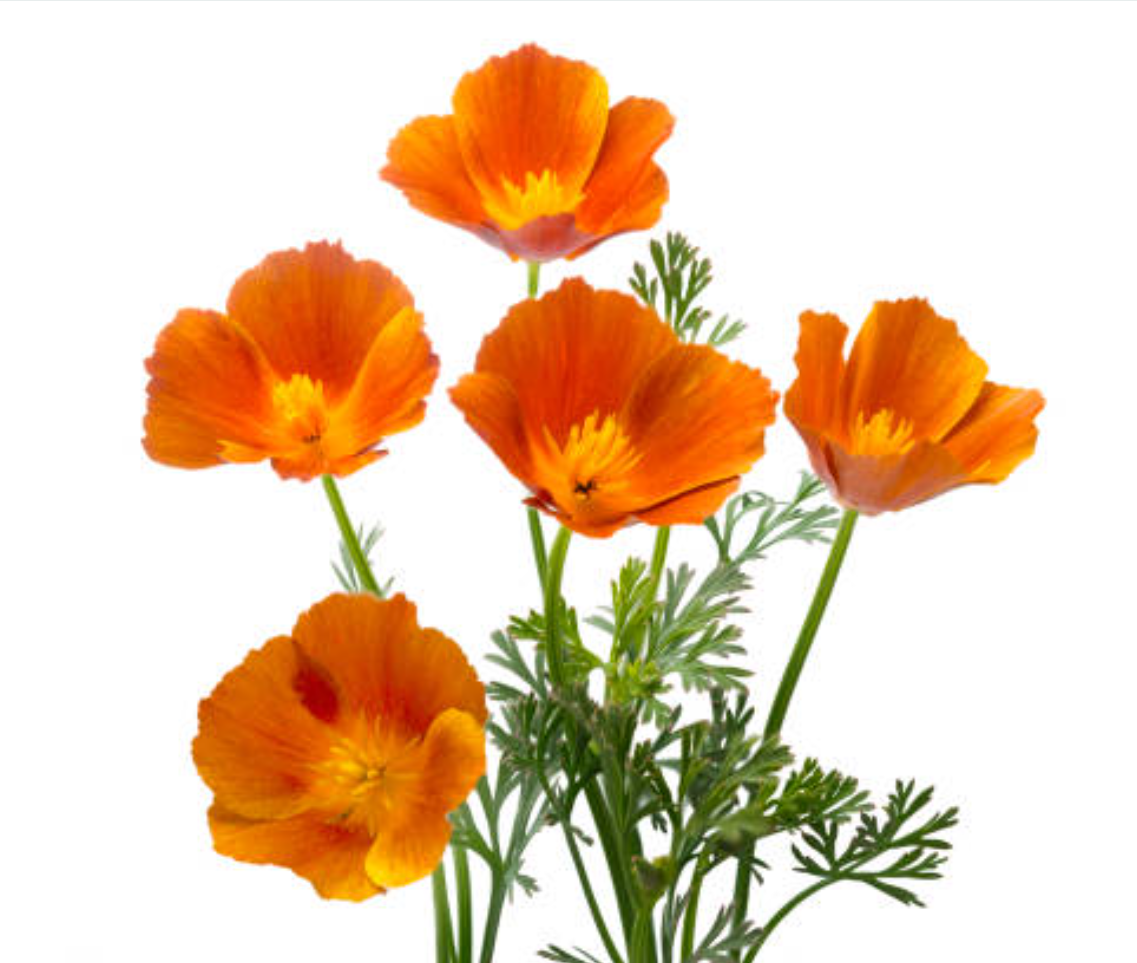
Morphology Annual to perennial plant, 30 to 60 cm tall. Very finely divided, characteristic glaucous blue-green leaves. Large solitary bright yellow-orange flowers with 4 petals, which close in the evening and during cloudy weather — a unique and identifying behavior. Pivoting orange root containing the majority of active alkaloids. Part used & extraction The whole flowering plant (aerial flowering parts), harvested in spring at maximum alkaloid concentrations. Standardized alkaloid content: 0.5 to 1.2% according to pharmacopoeia standards. Since alkaloids are not water-soluble, hydro-alcoholic extraction is essential — infusions are little or not active. |
Eschscholzia californica Cham. Large yellow-orange flowers with 4 petals and characteristic finely divided glaucous foliage |
|
Organoleptic Characteristics |
What the senses reveal about the plant
|
Appearance Flowers are bright yellow-orange, with very fine and divided glaucous foliage. Root is bright orange. Dry extract: characteristic orange-brown to amber-brown powder. |
Odor Slightly herbal and vegetal, without a strong scent, soft and subtle. The alcoholic extract develops a more characteristic, slightly spicy note. |
Taste Slightly bitter, not pronounced, well tolerated even by children. Without the harshness or toxicity of the opium poppy. No opiate flavor. |
Extract Color Orange-brown to amber in dry extract. Alcoholic extract (tincture): bright yellow-orange, reflecting the carotenoid richness of the flowers. |
|
Active Principles & Biochemistry |
A unique alkaloid complex: Sedative without opiates, without dependence, without toxicity
| Isoquinoline alkaloids (0.5 to 1.2%) | Unique alkaloid complex, signature of the plant. Californidine, eschscholtzine, protopine, allocryptopine, and sanguinarine act synergistically. Fundamentally: the synergy of the complex proves more effective and safer than each isolated alkaloid. No opiates, no morphine, no dependence; mechanism of action totally different from opium despite the family connection. |
| Protopine & californidine | Main sedative alkaloids. Protopine reduces catecholamines (adrenaline, noradrenaline) and enhances GABA production, an inhibitory neurotransmitter of the CNS. Also regulates serotonin. Antispasmodic and anti-inflammatory effects on the autonomic nervous system. Californidine potentiates the sedative action through a complementary mechanism. |
| Flavonoids & carotenoids | Glycosylated flavonols (isorhamnetol, rhamnetol). Antioxidant properties complementary to alkaloids, protective of neurons against oxidative stress. Carotenoids (beta-carotene, lutein) are responsible for the bright orange color of the flowers and contribute to the overall activity of the extract. |
| Chelerythrine & allocryptopine | Alkaloids with mild antimicrobial properties. Chelerythrine has shown in preliminary studies a potential to reduce opiate dependence, a promising research avenue opening important therapeutic perspectives. Allocryptopine contributes to the antispasmodic action on smooth muscle. |
|
Medicinal Properties & Traditional Use |
Recognized by the EMA: Phytotherapeutic reference for sleep and stress
|
Sedative & Sleep Inducer Reduces the time to fall asleep, improves sleep quality and depth, and decreases nighttime awakenings. Proven results in controlled clinical trials. No dependence, no hangover effect upon waking. The EMA recognizes its use for sleep disorders related to stress. |
Anxiolytic & Anti-Stress Reduces anxiety, nervous tension, and daytime nervousness. Acts on the brain's GABA receptors without the side effects of benzodiazepines. May alleviate tinnitus and stress-related hair loss. Synergistic with valerian and melatonin. |
Antispasmodic & Analgesic Relaxes smooth muscles: relieves cramps and nerve-related intestinal pain, stress-related digestive spasms. Mild analgesic properties via inhibition of pain transmission. Useful for tension headaches and stress-related migraines. |
Withdrawal & Dependence Reduction Promising avenue in supporting withdrawal from benzodiazepines and hypnotics. Chelerythrine shows potential in reducing opiate dependence in preliminary studies. Used as natural support during withdrawal cures, always under medical supervision. |
| Usage note: The alkaloids of California poppy are not water-soluble, infusions are little or not active. Prefer standardized dry extracts or alcoholic tinctures for optimal and reproducible efficacy. Not recommended during pregnancy and breastfeeding. Possible interactions with certain psychotropic medications (CYP3A4 inhibitors): consult a healthcare professional if undergoing treatment. Avoid driving if marked sedation is felt. |
| The European Medicines Agency (EMA) recognizes the traditional use of Eschscholzia californica for the relief of mild stress and difficulty falling asleep (no adverse effects reported at recommended doses). |
TITREX® products are dietary supplements and not medicines. They should not replace a healthy and balanced diet.