


|
Standardized Plant Extract - TITREX® Sea BeetWild beet: The ancestor of all beets, tonic and depurative |
Latin name Beta vulgaris subsp. maritima (L.) Arcang. Family Amaranthaceae (Chenopodiaceae) |
|
History & Botany |
From Atlantic shores to pharmacopoeia: The wild ancestor of all our beets
|
Sea beet is the original wild form of all cultivated beets (red beet, sugar beet, Swiss chard), from which they were gradually selected. A halophytic plant (salt-loving), it grows naturally on the coasts of Western Europe, the Mediterranean, North Africa, and the Atlantic coasts up to the Caspian Sea. Its Latin name comes from the Greek beta, which the Romans attributed to the shape of its bent stem, evoking the letter β. Consumed since Prehistory by the Celts (2000 BC), described by Pliny the Elder, Dioscorides, and Hippocrates, it was used against constipation, fevers, and skin conditions. In modern phytotherapy, it is its exceptional nutritional and antioxidant profile that generates interest, particularly its betalains, protective pigments unique in the plant kingdom, absent from all other plant families. |
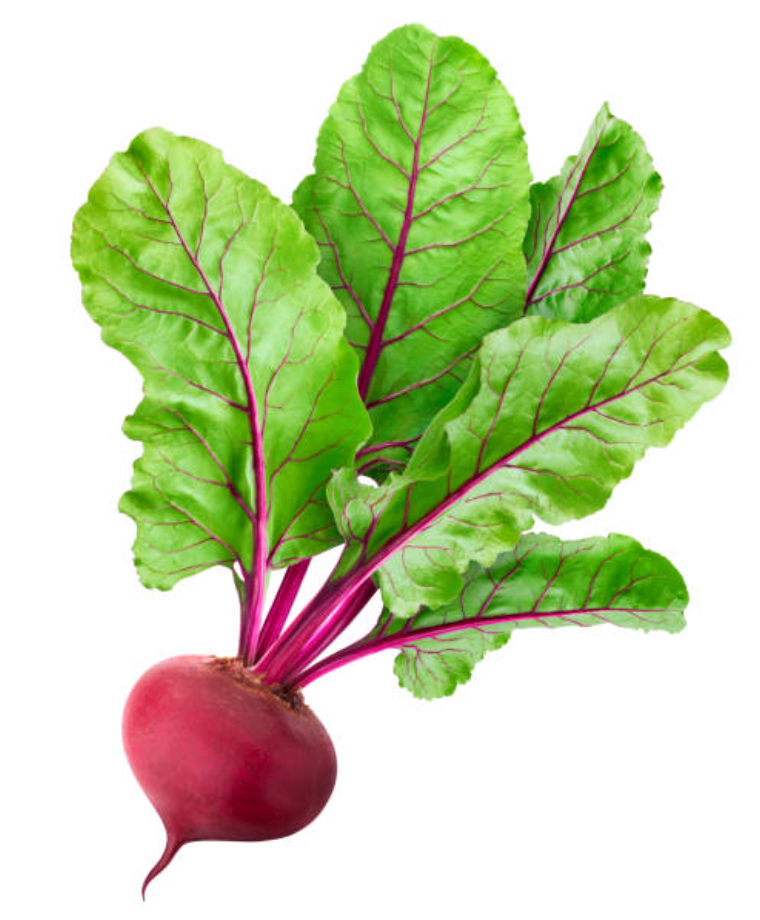
Morphology Herbaceous plant, 30 to 80 cm tall, with a sprawling or upright habit. Basal oval, fleshy leaves with characteristic reddish veins. Sometimes reddish-tinged branched stems. Discreet greenish flowers in elongated spikes. Fibrous, non-swollen root, unlike cultivated beet, a sign of its original wild state. Part used & extraction The leaves and the whole plant, harvested before flowering for their maximum betalain concentration. Sometimes the root for traditional use. Hydro-alcoholic extraction, standardized, with the extract titrated in total betalains, markers of quality and activity. |
Beta vulgaris subsp. maritima Fleshy leaves with reddish veins and characteristic taproot of the wild form |
|
Organoleptic Characteristics |
What the senses reveal about the plant
|
Appearance Leaves are dark green and glossy, with veins and stems sometimes reddish-burgundy. Dry extract: deep red-burgundy powder, highly coloring, signature of betalains. |
Odor Vegetal, slightly earthy and iodized, typical of seaside plants. The extract develops a softer and slightly sweet note. |
Taste Slightly salty and sweet, subtly earthy and mineral. More iodized than cultivated beet. Well tolerated in gel capsules or capsules. |
Extract Color Deep red-burgundy, characteristic of betalains, unique pigments in the plant kingdom. Highly coloring: direct visual indicator of active principle content. |
|
Active Principles & Biochemistry |
Unique pigments in the world: Betalains at the heart of exceptional protective chemistry
| Betalains (betacyanins & betaxanthins) | Signature antioxidant pigments, unique in the plant kingdom. Betacyanins (red-burgundy, including betanin or red betaine) and betaxanthins (yellow) are nitrogenous pigments exclusive to the Amaranthaceae family, absent from all other botanical families. Powerful anti-inflammatory, antimicrobial, and antiparasitic properties. Antioxidant activity superior to anthocyanins. Chelate intracellular heavy metals. Essential quality markers of standardized extracts. |
| Flavonoids & phenolic compounds | Kaempferol, quercetin, coumaric acid, protocatechuic acid, chlorogenic acid. Powerful antioxidant properties, anti-inflammatory (COX-2 inhibition), and vascular protective effects. Synergistic with betalains for comprehensive cellular protection. |
| Vitamins & minerals | Vitamins A (beta-carotene), C, K, and B vitamins. Potassium (natural diuretic), magnesium, calcium, organic sulfur, absorbable iron, iodine (marine origin). Remarkable mineral profile for a plant, reflecting its coastal habitat and its ability to concentrate marine minerals. |
| Betaine & folates | Betaine: A methyl-donating amino acid, vascular and hepatic protector. Reduces homocysteine (a major cardiovascular risk factor) and supports hepatic lipid metabolism. Folates (vitamin B9): Essential for cellular synthesis, neurological protection, and prevention of neural tube defects. |
| Lithium, Rubidium & Magnesium (neuromodulatory trio) | Lithium (trace element): Sea beet is one of the plants richest in natural bioavailable lithium. In trace amounts, lithium acts as a powerful neurotransmitter regulator: it increases the synthesis and release of serotonin (the well-being and serenity neurotransmitter), modulates dopamine, and strengthens inhibitory GABA while curbing excitatory glutamate. It protects neurons by inhibiting GSK-3β and stimulates neurogenesis in the hippocampus (memory, emotional regulation). Epidemiological studies show that regions with higher natural lithium content have significantly lower rates of depression, anxiety, and mood disorders. Recognized in oligotherapy as a natural mood stabilizer and anti-stress agent of reference. Rubidium (trace element): A chemical analog of potassium, rubidium enters nerve cells via the Na+/K+ ATPase pump and acts at the level of the central nervous system by increasing the synaptic availability of neurotransmitters, particularly serotonin and norepinephrine. Clinical studies published in the American Journal of Psychiatry and Science have explored its potential as a natural antidepressant, positioning it as complementary to lithium in mood stabilization. Its action is opposite to that of lithium on certain pathways (c-AMP cyclase), offering a remarkable neurochemical balance. It also reduces stress reactivity in animal models. Magnesium: A cofactor in over 300 enzymatic reactions, magnesium is essential for the synthesis of dopamine, serotonin, GABA, and acetylcholine. It strengthens inhibitory GABA receptors, tempers excitatory signals from glutamate, and moderates the HPA axis (hypothalamic-pituitary-adrenal) by reducing cortisol release. Chronic stress depletes magnesium, creating a vicious cycle: less magnesium = more neuronal hyperexcitability = more stress. Sea beet, with its natural content of highly bioavailable magnesium from a mineralized marine environment, helps naturally break this cycle. Synergy of the trio: These three elements act synergistically to stabilize mood, reduce anxiety, improve stress resilience, and support neuroprotection, giving sea beet a unique neuromodulatory and nutritional dimension among medicinal plants. |
|
Medicinal Properties & Traditional Use |
Recognized since Antiquity: Validated by modern research
|
Antioxidant & Cellular Protector Betalains provide cellular protection against oxidative stress superior to most cultivated vegetables. Vascular protection and prevention of premature cellular aging. Documented systemic anti-inflammatory activity. |
Depurative & Digestive Traditional use validated for constipation, digestive disorders, and febrile states. Emollient action on digestive mucous membranes. Stimulates liver and biliary function. Contributes to the elimination of toxins and heavy metals (chelation by betalains). |
Remineralizing & Tonic Complete mineral profile (potassium, magnesium, calcium, iron, iodine) contributing to electrolyte balance and general vitality. Indicated for fatigue, convalescence, and overwork periods. |
Cardioprotective & Hepatic Betaine reduces plasma homocysteine (a major cardiovascular risk factor) and protects the liver from steatosis. Folates contribute to neurological and vascular protection. Mild hypotensive properties of potassium. |
|
Neuromodulation & Stress Resilience: Lithium, Rubidium & Magnesium |
An exceptional mineral trio: Neurotransmitters, nerve impulses, and brain protection from the Atlantic coasts
|
Lithium: Mood Regulator & Neuroprotector Sea beet is one of the plants richest in natural bioavailable lithium. In trace amounts, lithium increases the synthesis and release of serotonin (well-being, serenity, sleep), modulates dopamine, and strengthens inhibitory GABA while curbing excitatory glutamate. It protects neurons by inhibiting GSK-3β and stimulates neurogenesis in the hippocampus (memory, emotional regulation). Epidemiological studies show that regions with higher natural lithium content have significantly lower rates of depression, anxiety, and mood disorders. Recognized in oligotherapy as a natural mood stabilizer and anti-stress agent of reference. |
Rubidium: Natural Antidepressant & Nerve Stabilizer A chemical analog of potassium, rubidium enters nerve cells via the Na+/K+ ATPase pump and acts at the level of the CNS by increasing the synaptic availability of serotonin and norepinephrine. Studies published in the American Journal of Psychiatry and Science document its potential as a natural antidepressant. Its action, complementary and opposite to lithium on certain intracellular signaling pathways (c-AMP), offers a remarkable neurochemical balance. It reduces behavioral reactivity to stress and dopamine release in the nucleus accumbens during acute stress episodes, with very low toxicity at physiological doses. |
Magnesium: Universal Anti-Stress Cofactor A cofactor in over 300 enzymatic reactions, magnesium is essential for the synthesis of dopamine, serotonin, GABA, and acetylcholine. It strengthens inhibitory GABA receptors, tempers excitatory signals from glutamate, and moderates the HPA axis (hypothalamic-pituitary-adrenal) by reducing cortisol release. Chronic stress depletes magnesium, creating a vicious cycle of neuronal hyperexcitability. Sea beet, with its content of highly bioavailable magnesium from a mineralized marine environment, naturally helps break this cycle. |
| Usage note: Well tolerated at recommended doses. Sea beet may cause red coloring of urine and stool (beeturia) in some individuals (a benign phenomenon related to betalains, with no pathological significance). Caution in cases of hypotension (potassium) or known allergy to Amaranthaceae (Swiss chard, spinach, quinoa). Not recommended at very high doses during pregnancy (nitrate content). Store away from light to preserve betalains sensitive to oxidation. |
| The betalains of sea beet are the only known nitrogenous plant pigments, unique to the Amaranthaceae family. But it is its simultaneous concentration of lithium, rubidium, and magnesium (three neuromodulatory elements acting synergistically on serotonin, GABA, dopamine, and stress resilience) that gives it an exceptional neurological and nutritional dimension, unique in the plant world. |
TITREX® products are dietary supplements and not medicines. They should not replace a healthy and balanced diet.