


|
Essential Oil - Aromatherapy Lemon EucalyptusThe anti-inflammatory essential oil for joints |
Latin name Corymbia citriodora (Hook.) K.D.Hill & L.A.S.Johnson Syn. Eucalyptus citriodora - Family Myrtaceae |
|
History & Botany |
From Australia to the world: The fragrant giant of tropical forests
|
Lemon eucalyptus is a tall tree native to Australia, where Aboriginal people used its sap directly on wounds to accelerate healing. It can reach 40 to 50 meters in height and is recognized by its smooth, grayish-white bark, which renews annually, and its long, persistent leaves that immediately release a powerfully lemon-scented fragrance when crushed. Introduced to Europe in the 19th century, it is now cultivated in Madagascar, Brazil, China, and South Africa for essential oil production. In Madagascar, it is called kininina oliva ("quinine tree"), referring to its anti-malarial properties. Its official botanical name has been Corymbia citriodora since 1995, but it remains universally known as Eucalyptus citriodora. Distillation is preferably carried out in the early afternoon when the citronellal concentration in the leaves is at its highest. |
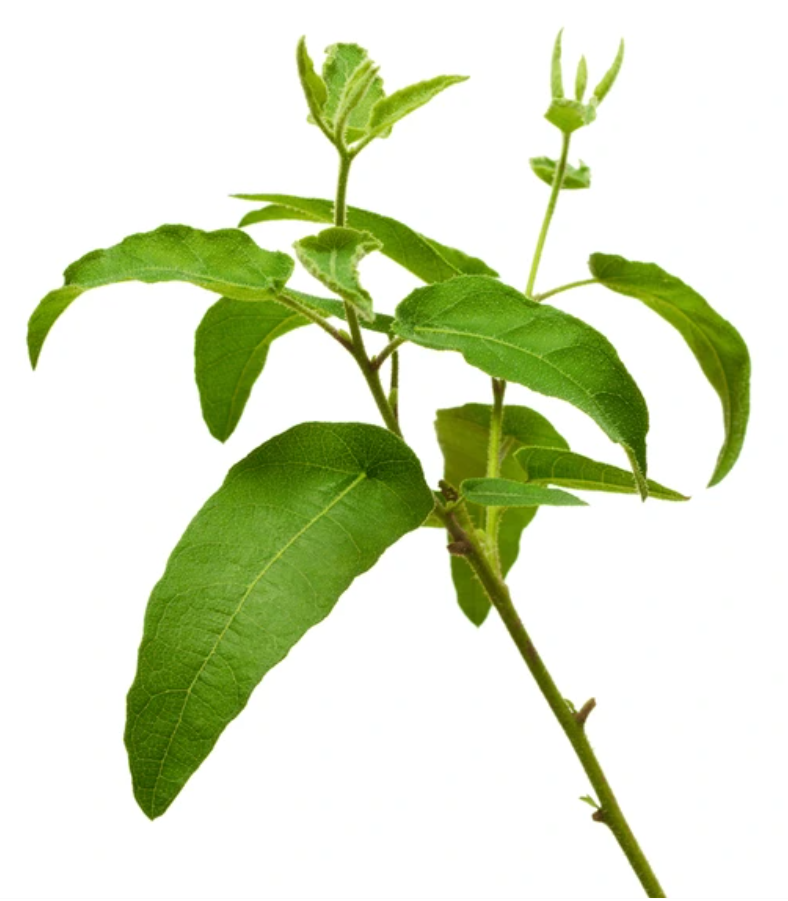
Morphology Majestic tall tree with a slender trunk, smooth pinkish-white bark that renews annually in characteristic patches. Persistent lanceolate leaves, alternate, intense green, extremely fragrant when crushed. White flowers in corymbs. The tree can live for several centuries in its natural habitat. Distilled part & extraction method The leaves, harvested twice a year (early summer and late autumn), are steam-distilled within hours of harvesting, preferably in the early afternoon to maximize citronellal content. Yield: 0.5 to 1.2%. |
Corymbia citriodora Fragrant lanceolate leaves and characteristic pinkish-white bark |
|
Active Principles & Biochemistry |
Dominated by terpene aldehydes: A composition without eucalyptol, unique in the eucalyptus family
| Citronellal (65 to 85%) | Major molecule and quality marker. Terpene aldehyde with powerful anti-inflammatory effects: inhibits lipoxygenase and cyclooxygenase (COX-1, COX-2), enzymes that catalyze the synthesis of PGE2 prostaglandins, key mediators of inflammation and pain. Responsible for the intense characteristic lemon scent. |
| Citronellol & nerol | Monoterpene alcohols resulting from the partial reduction of citronellal. Antimicrobial properties, powerful insect repellents, soothing action on the nervous system and irritated skin. Contribute to the skin-friendly nature of the essential oil. |
| Isopulegol | Monoterpene with complementary anti-inflammatory and analgesic properties. Refreshing and muscle-relaxing effect. Natural precursor of menthol through enzymatic hydrogenation. |
| Geraniol & limonene | Complementary antibacterial, antifungal, and antioxidant properties. Limonene contributes to the tonic and skin effects. Geraniol adds a floral note and enhances the overall insect-repellent and antimicrobial activity. |
|
Organoleptic Properties |
Sensory characteristics of the essential oil : identification and quality benchmarks
|
Appearance Essential oil A fluid and clear liquid. Color: pale yellow to colorless, slightly more colored than niaouli. Absence of sediment in a quality essential oil. |
Odor Pure and diluted EO Fresh, powerfully lemon-scented, slightly floral and mentholated in the base note. Simultaneously reminiscent of lemon, verbena, and slightly rose. Very pleasant and immediately recognizable. |
Taste Diluted internal use Fresh, lemony, and slightly camphorated. Much more pleasant in the mouth than other eucalyptus oils. Internal use only under professional advice. |
Olfactory Note Perfumery & Diffusion Fresh, lemony top note, highly appreciated in perfumery. In diffusion, creates a tonic, purifying, and anti-stress atmosphere. Excellent synergy with lavender and lemon. |
Density & Solubility Physical characteristics Density: 0.854 to 0.875 g/cm³, very fluid and penetrating. Lipid-soluble, insoluble in water. Miscible with 90% ethanol. Refractive index: 1.449 to 1.455. |
|
Medicinal Properties & Traditional Use |
The reference essential oil for joint and muscle pain, without respiratory contraindications
|
Major Anti-Inflammatory & Analgesic Reference action in aromatherapy for ostearticular pain. Osteoarthritis, arthritis, polyarthritis, rheumatism, sciatica, tendinitis, muscle contractions, sprains. Citronellal inhibits COX-1 and COX-2 with efficacy comparable to some NSAIDs in topical application. |
Insect Repellent & Natural Deterrent Citronellal and citronellol are powerful and proven natural repellents against mosquitoes (including Aedes, the dengue vector), ticks, flies, ants, and wasps. Effective in diffusion and diluted cutaneous application. Natural alternative to chemical insect repellents. |
Relaxing & Soothing Calming properties on the central nervous system. Reduces tension and stress through atmospheric diffusion. Facilitates falling asleep. Soothes skin irritations, insect bites, and inflammatory redness in diluted topical application. |
| Usage note: Does not contain eucalyptol (1,8-cineole) and therefore does not have the respiratory contraindications of other eucalyptus oils. Suitable for adults and children over 12 years old under parental supervision. Always dilute before cutaneous application (5-10% in vegetable oil). Safe for diffusion without restrictions for healthy adults. Mild photosensitivity: avoid sun exposure within 12 hours of cutaneous application. Not recommended for pregnant or breastfeeding women. |
| Recognized by clinical aromatherapy as the reference essential oil for rheumatic and joint conditions, lemon eucalyptus is the only oil in the eucalyptus family that does not contain eucalyptol, giving it a unique usage profile: effective for joints, without respiratory restrictions, usable from age 12. |
Essential oils are concentrated products. Consult a healthcare professional before use, especially in cases of pregnancy, breastfeeding, or for children.