


|
Essential Oil - Aromatherapy Spanish Red ThymeWith thymol : The most powerful phenolic anti-infective in the plant kingdom |
Latin name Thymus zygis L. ct thymol Family Lamiaceae |
|
History & Botany |
Five millennia of history: From Greek altars to modern laboratories
|
Thyme is one of the oldest and most universal medicinal plants in history. The Egyptians used it for embalming the dead. The Greeks offered it to their gods and burned it in their temples as purifying incense, with thymus meaning "to perfume" in Greek. For medieval knights, it symbolized courage. Dioscorides and Hippocrates recommended it for respiratory infections and digestive disorders, in poultices or fumigations. Thymus zygis is a species native to the Iberian Peninsula (Spain, Portugal), where it grows on arid, sunny, calcareous soils of the garrigue. Its thymol chemotype is the most sought-after in aromatherapy for its exceptional anti-infective activity. Thymol was scientifically identified in the 18th century; its antiseptic power was demonstrated against anthrax, typhoid, and tuberculosis germs. |
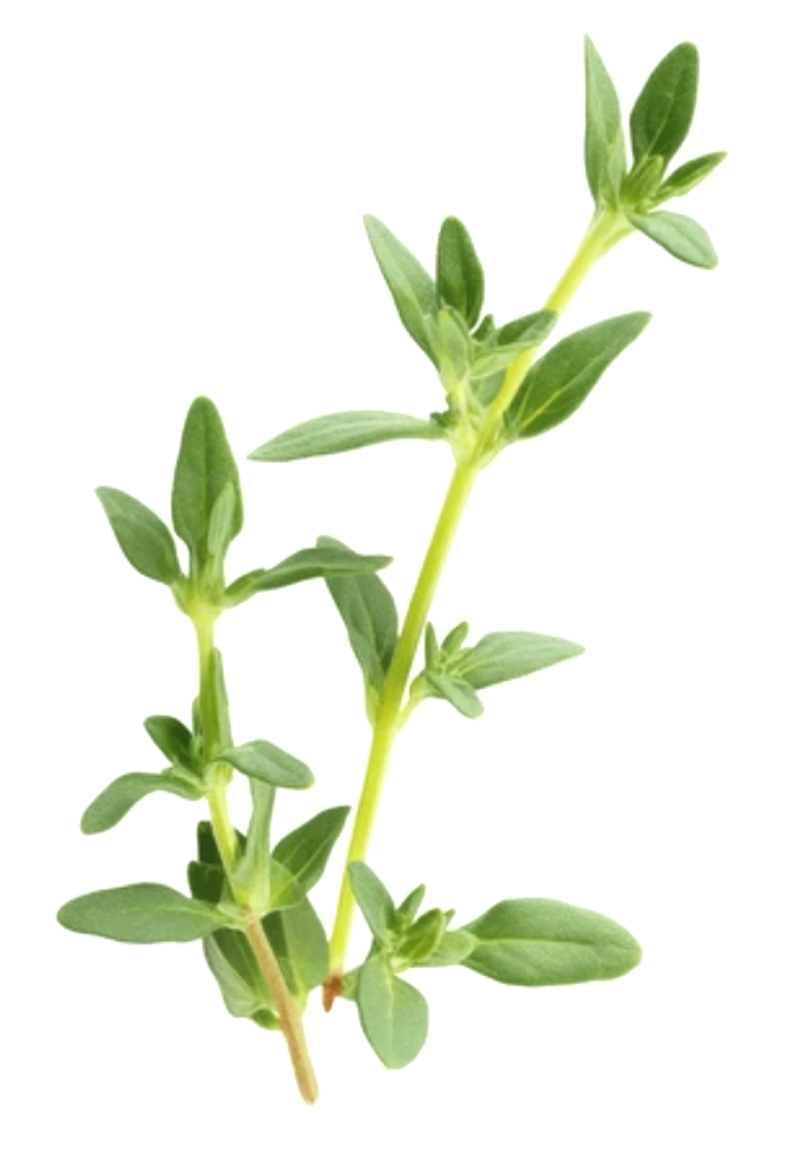
Morphology Small creeping or cushion-like shrub, highly branched. Leaves are finer and slightly longer than common thyme, gray-green, and very fragrant when crushed. Pink to lilac flowers in terminal spikes, very attractive to bees. Grows in garrigue on well-drained, sunny, calcareous soils, up to 1,800 meters in altitude. Distilled part & origin The flowering tops, harvested in early summer at full sun, at the stage of maximum flowering. Distilled by steam. Yield: about 0.8 to 1.2%. Main production area: Spain (Castile, Andalusia) and the western Mediterranean basin. |
Thymus zygis L. ct thymol Small shrub of the Iberian garrigue with pink-lilac flowers and very aromatic gray-green leaves |
|
Organoleptic Characteristics |
What the senses reveal about the essential oil
|
Appearance Mobile liquid, pale yellow to orange in fresh EO. Turns red-brown after oxidation, hence the name "red thyme." Warning sign: An EO that is too brownish is oxidized and loses efficacy. |
Odor Aromatic, warm, and spicy, distinctly phenolic, typically "thyme" but subtler than common thyme. Persistent warm note, deeply herbal, slightly medicinal. |
Taste Aromatic, harsh, and warm, peppery and persistent. Highly dermocaustic when pure: immediate burning of mucous membranes. Never test undiluted. Always dilute in a vegetable oil. |
Density & Index Density: 0.915 to 0.935 g/cm³. Phenol coefficient: 13 to 20 (compared to 1 for the reference phenol). Refractive index: 1.493-1.505. |
|
Active Principles & Biochemistry |
The highest phenol coefficient in the plant kingdom: An exceptionally effective biochemical composition
| Thymol (36 to 55%) | Major phenol and absolute quality marker. Phenol coefficient of 20 (compared to 1 for the reference phenol), making it one of the most powerful natural antiseptics known. Broad-spectrum antibacterial, active against E. coli, Staphylococcus aureus (including MRSA), Pseudomonas, Listeria, Salmonella, and Candida albicans. Also inhibits acetylcholinesterase (potential neuroprotective effects) and modulates GABA(A) receptors. Documented antiviral activity against several enveloped viruses. |
| Paracymene (8 to 28%) | Biosynthetic precursor of thymol. In synergy, it amplifies and prolongs the antibacterial action by disrupting the bacterial membrane and facilitating thymol penetration. Important analgesic and mucolytic expectorant properties for bronchial conditions. |
| Carvacrol & γ-terpinene | Complementary phenol and monoterpene. Synergistic antifungal and antibacterial activity with thymol, particularly against bacterial biofilms. Carvacrol destabilizes the cell membranes of pathogens. γ-Terpinene provides marked antioxidant and expectorant action on bronchial secretions. |
| Linalool & β-caryophyllene | Soothing monoterpenol that reduces the dermocaustic effect of the major phenols and provides better skin tolerance. β-Caryophyllene (sesquiterpene) provides significant anti-inflammatory and calming properties: a partial agonist of CB2 receptors of the endocannabinoid system, it modulates pain and inflammation without psychotropic effects. |
|
Medicinal Properties & Traditional Use |
The ultimate weapon in aromatherapy against resistant infections
|
Broad-Spectrum Anti-Infective Major antibacterial, antiviral, antifungal, and antiparasitic agent. Severe ENT infections (sore throats, sinusitis, bronchitis, ear infections), urinary infections, digestive infections, skin infections (mycoses, boils, infectious dermatoses). Active against multi-drug-resistant bacteria (MRSA, ESBL). |
Immunostimulant & Revitalizing Powerful stimulant of the immune system, increases leukocyte production. Recommended for prevention and treatment of flu-like conditions, deep physical and psychological fatigue, and prolonged convalescence. Digestive tonic: stimulates appetite and gastric secretions. Restores energy and confidence. |
Synergy with Antibiotics Carvacrol reduces bacterial biofilms, thymol decreases antibiotic resistance: together, they enhance the action of antibiotics and allow for reduced doses. Validated by several clinical studies. Active on skin ulcers, chronic wounds, and recurrent infectious dermatoses. |
Expectorant & Mucolytic Paracymene and γ-terpinene liquefy bronchial secretions and facilitate their evacuation. Indicated for bronchitis, tracheitis, whooping cough, and persistent productive coughs. Traditional use validated in several European pharmacopoeias. Optimal synergy with globulus eucalyptus EO in diffusion or diluted chest massage. |
| Usage note: Phenol-rich EO: highly dermocaustic, never use undiluted. Maximum cutaneous dilution: 5%. Internal use reserved for individuals over 12 years old, under medical advice, short course (10 to 14 days maximum). Not recommended for atmospheric diffusion (mucous membrane irritation). Always combine with a hepatoprotective EO (lemon, rosemary with verbenone) or a buffer system for internal use. Contraindicated: pregnancy, breastfeeding, children under 12, liver disorders, epilepsy. Store away from light and heat; once oxidized (dark red-brown color), the EO should no longer be used internally. |
| With a phenol coefficient of 13 to 20 (13 to 20 times the power of the reference phenol), the thymol of Thymus zygis is the most powerful natural antiseptic active principle known to date, including against multi-drug-resistant bacterial strains. |
Essential oils are concentrated products. Consult a healthcare professional before use, especially in cases of pregnancy, breastfeeding, children, or chronic conditions.