


|
Essential Oil - Aromatherapy Mandarin PetitgrainThe pearl of citrus: Antispasmodic, calming, and nerve-balancing |
Latin name Citrus reticulata Blanco Family Rutaceae |
|
History & Botany |
From Imperial China to Mediterranean orchards: 3,000 years of aromatic history
|
The mandarin tree is native to Southern China and Vietnam, where it has been cultivated for over 3,000 years. Its name honors the mandarins, high-ranking officials of the Chinese empire who were great enthusiasts of it, the orange color of its fruits resembling the color of their official robes. It gradually spread throughout Southeast Asia and reached Europe in the 19th century, where it acclimatized perfectly in the Mediterranean basin, particularly in Italy, Spain, and Egypt. The essential oil of mandarin petitgrain fundamentally differs from mandarin EO (extracted from the fruit peel): it is extracted from the leaves and young branches of the tree by distillation. Its composition is unique, dominated by rare nitrogenous esters (notably methyl anthranilate), which give it exceptional calming and antispasmodic properties, very different from all other citrus oils. It is one of the most sought-after essential oils in aromatherapy for stress management and sleep disorders. |
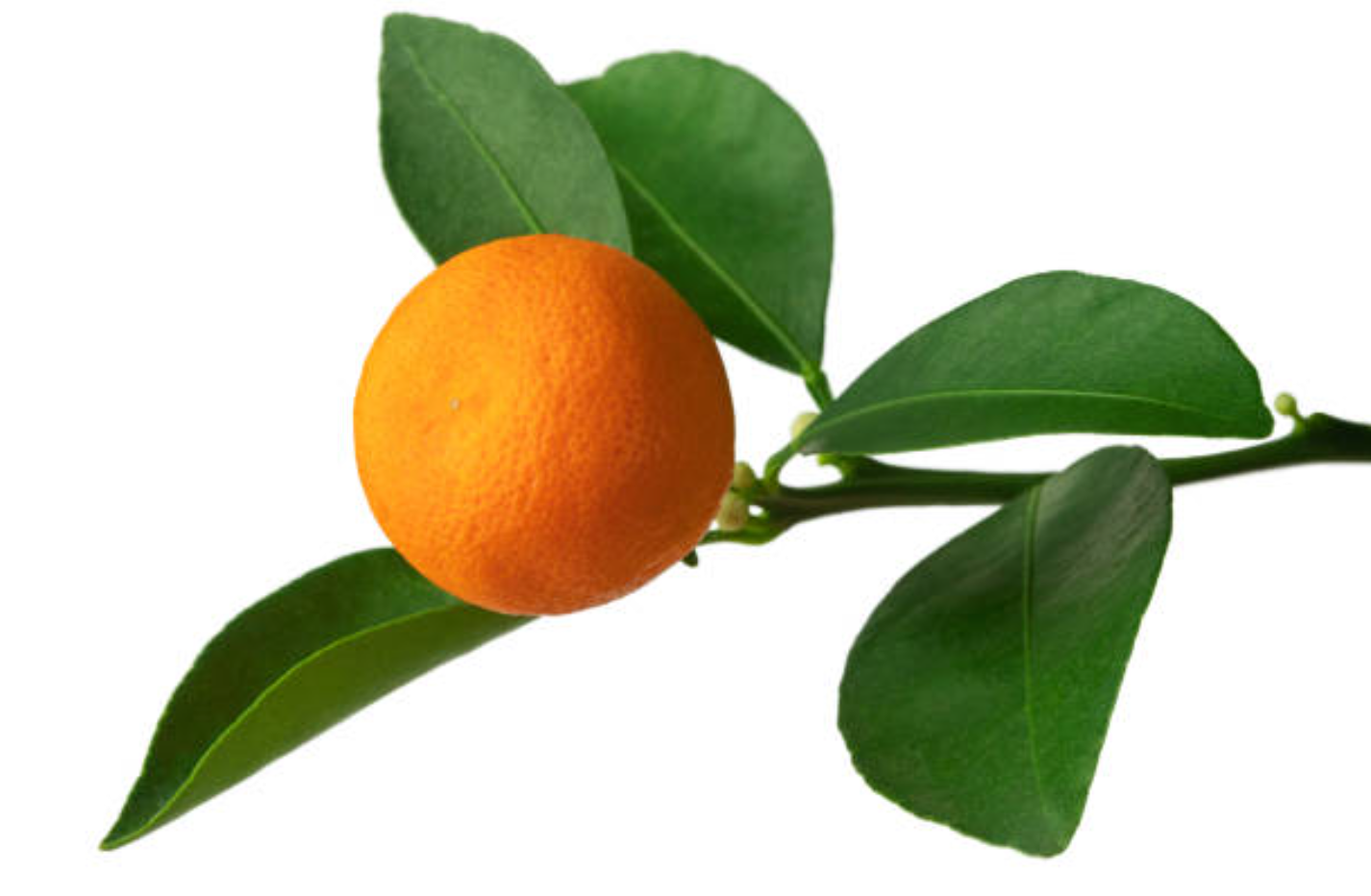
Morphology Elegant small fruit tree, 3 to 8 meters tall, with persistent oval-lanceolate leaves, intense green and glossy. Highly fragrant white flowers. Spherical, slightly flattened fruits with thin, easily detachable skin. Crushed leaves immediately release a floral, fruity, and slightly spicy fragrance. Distilled part & origin The fresh leaves and young branches, steam-distilled. Cultivated and distilled primarily in Italy (Sicily), Egypt, and Spain. Not to be confused with bitter orange petitgrain (Citrus aurantium), derived from the bitter orange tree. |
Citrus reticulata Characteristic lanceolate aromatic leaves and fruits |
|
Active Principles & Biochemistry |
A unique composition dominated by nitrogenous esters, extremely rare in the plant kingdom
| Methyl anthranilate (N-methyl, ~50%) | Signature nitrogenous ester, extremely rare in aromatherapy. Responsible for the unique floral fragrance of the EO. Powerful antidepressant, anxiolytic, and sedative properties. Acts on the GABA-A receptors of the central nervous system, promoting deep relaxation and sleep. One of the few plant molecules with direct GABA action. |
| γ-Terpinene (~25%) | Major monoterpene. Antioxidant, anti-inflammatory, and antispasmodic properties. Contributes to the muscle-relaxing and digestive action of the oil. Strengthens the sedative effect of methyl anthranilate through molecular synergy. |
| Limonene & paracymene | Monoterpenes with mild antioxidant, tonic, and antiseptic properties. Limonene enhances the cutaneous penetration of other active molecules and contributes to the citrus note of the EO. |
| Terpene esters | Linalyl acetate and other esters contributing to complementary antispasmodic and calming properties. Participate in the characteristic floral olfactory profile and the overall gentleness of the EO. |
|
Organoleptic Properties |
Sensory characteristics of the essential oil : identification and quality benchmarks
|
Appearance Essential oil A fluid and clear liquid. Color: pale yellow to very light orange, slightly more colored than other petitgrain oils. Absence of sediment in a quality EO. |
Odor Pure and diluted EO Floral, mandarin-fruity, slightly smoky and honeyed, very enveloping. Notes of citrus, orange blossom, and sweet spices. Complex and immediately recognizable fragrance. |
Taste Diluted internal use Mild, slightly lemony, and floral, pleasant and non-aggressive in the mouth. Significantly milder than other EOs in the family. Internal use under professional advice. |
Olfactory Note Perfumery & Diffusion Top to middle note, highly prized in perfumery and natural cosmetics. When diffused in the evening, creates a soothing and enveloping atmosphere conducive to sleep. Long-lasting and refined sillage. |
Density & Solubility Physical characteristics Density: 0.855 to 0.875 g/cm³. Lipid-soluble, insoluble in pure water. Miscible with 90% ethanol. Mild photosensitivity: avoid sun exposure within 8 hours of cutaneous application. |
|
Medicinal Properties & Traditional Use |
Gentleness and efficacy combined: The ideal EO for modern stress
|
Antispasmodic & Nerve Balancing Central action on the autonomic nervous system. Calms muscle and digestive spasms, relieves stress-related tension. Rebalances the nervous system in cases of overstimulation or nervous exhaustion, emotional agitation, or mild burnout. |
Anxiolytic & Sleep-Inducing Methyl anthranilate acts on GABA-A receptors: reduces anxiety, rumination, and sleep-onset insomnia. Ideal for evening diffusion or solar plexus massage. Particularly suitable for hypersensitive individuals and children over 6 years old. |
Skin Tonic & Seborrheic Regulator Tonifies and regenerates tired or dull skin. Regulates sebum production, indicated for combination and oily skin. Mild healing properties. Highly appreciated in natural cosmetics and perfumery for its unique and persistent floral sillage. |
| Usage note: Well-tolerated EO and one of the gentlest in aromatherapy. Photosensitizing: avoid sun exposure within 8 hours of cutaneous application. Dilute to a maximum of 20% in a vegetable oil. Can be used in diffusion, massage, skin care, and internally. Not recommended for pregnant women in the first trimester or infants under 6 months. Can be used cautiously from 6 years old in diffusion. |
| Methyl anthranilate from mandarin petitgrain is one of the few plant-derived molecules that acts directly on the brain's GABA-A receptors, the same mechanism as benzodiazepines, but gently, naturally, and without the risk of dependence. This exceptional property makes it the reference essential oil for anxiety and insomnia in aromatherapy. |
Essential oils are concentrated products. Consult a healthcare professional before use, especially in cases of pregnancy, breastfeeding, or for children.