


|
Standardized Plant Extract - TITREX® Black RadishThe sovereign drainer: Hepato-biliary detoxifier since the time of the pharaohs |
Latin name Raphanus sativus L. var. niger (Mill.) J.Kern Family Brassicaceae (Cruciferae) |
|
History & Botany |
From the pyramids of Egypt to modern phytotherapy: 4,000 years of hepatobiliary tradition
|
Black radish has been cultivated for its root since the time of the Egyptian pharaohs: traces of its cultivation have been found at pyramid sites. The Greeks and Romans used it as a medicinal food. In 13th-century Arab medicine, Avicenna recommended its internal use to dissolve stones and "clean" the kidneys and gallbladder. Its botanical name is explicit: Raphanus comes from the Greek "rave," sativus means "cultivated," and niger means "black." It belongs to the same family as cabbages and broccoli. A highly appreciated vegetable plant, it provides a large root with white flesh and a strong and pungent flavor, covered with characteristic black skin. Modern phytotherapy confirms its traditional properties: a 2020 study published in the Journal of Ethnopharmacology demonstrated that black radish extract increases the activity of hepatic detoxification enzymes by 35% and reduces markers of liver inflammation. |
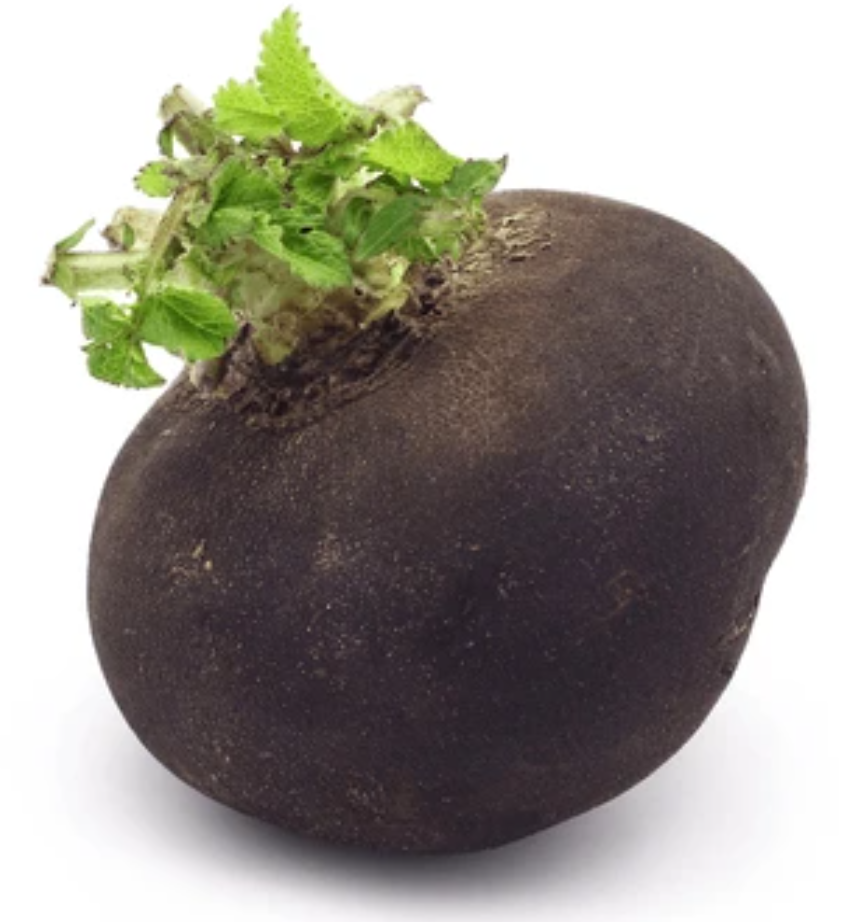
Morphology Annual to biennial herbaceous plant with tall, upright stems, hairy leaves, and white or violet flowers. Its voluminous root, black on the outside and white on the inside, can measure up to 50 cm in length and weigh several kilograms. The pungent flavor increases with the age of the root. Part used & extraction The fresh or dried root, harvested in autumn. In phytotherapy: liquid extracts (pressed juice) or standardized dry extracts in glucosinolates. Also available as a syrup (maceration in sugar). Mainly harvested in France, Germany, and Eastern Europe. |
Raphanus sativus var. niger Characteristic black root with dense white flesh |
|
Active Principles & Biochemistry |
Glucosinolates, raphanol, and isothiocyanates: Unique sulfur compounds with exceptional hepatobiliary properties
| Glucosinolates & raphanol (active sulfur compounds) | Signature sulfur compounds. Glucosinolates stimulate hepatic detoxification enzymes (phases I and II, glutathione S-transferase). Raphanol (hydrolyzed sulfur glucoside) is responsible for the choleretic and cholagogue action. Clinically documented prevention of cholesterol gallstone formation. |
| Raphanin & isothiocyanates | Raphanin: antibacterial, antifungal, and diuretic. Isothiocyanates (released during chewing or enzymatic digestion) are powerfully anti-inflammatory, antibacterial, and induce phase II hepatic detoxification via Nrf2 activation. |
| Vitamins B & C, phenolic compounds | Vitamins C and B protect liver cells against oxidative stress. Phenolic compounds with antioxidant properties (sinapic acid, kaempferol). Potassium, calcium, magnesium, phosphorus for electrolyte balance and kidney support. |
| Peroxidases & enzymes | Endogenous enzymes that promote protein digestion and stimulate intestinal peristalsis. Mucolytic action on bronchial secretions. These enzymes are active in fresh juice but partially destroyed by heat during extraction. |
|
Organoleptic Properties |
Sensory characteristics of the dry root and extract : identification and quality benchmarks
|
Appearance Dry root Skin is black to dark brown, characteristic. Flesh is dense white and crunchy. Powder is beige to cream-brown, slightly granular. |
Color Dry extract / juice Powder: light beige to pale brown. Fresh juice: colorless to slightly yellowish. Hydroalcoholic extract: pale amber-brown. |
Odor Dry root & extract Strong, pungent, and sulfurous, characteristic of crucifers. Notes similar to cabbage and horseradish. The odor is a direct indicator of the richness in active sulfur compounds. |
Taste Extract in solution Very pungent, acrid, and peppery — the intensity of the pungency is proportional to the glucosinolate content. Slightly bitter and persistent aftertaste. Pronounced taste, often masked in capsules. |
Solubility Dry extract Fine powder, good solubility in hot water and hydroalcoholic solutions. Glucosinolates are highly water-soluble. Volatile sulfur compounds may escape during dilution in hot water. |
|
Medicinal Properties & Traditional Use |
Reference hepatobiliary drainer: Ideal in combination with artichoke
|
Hepatobiliary Drainer Stimulates the secretion and evacuation of bile. Detoxifies the liver by activating hepatic detoxification enzymes. Reference for seasonal detox cures, ideally combined with artichoke for optimal synergy. Prevents the formation of cholesterol gallstones. |
Digestive & Intestinal Tonic Stimulates intestinal peristalsis and combats constipation. Relieves dyspepsia related to poor biliary function. Improves fat digestion. Traditional treatment for bloating, nausea, and bad breath of digestive origin. |
Mucolytic & Respiratory Mucolytic properties on bronchial secretions. Traditionally used for bronchitis, productive coughs, and upper respiratory tract infections. Mild antibacterial action on ENT pathogens due to raphanin. |
| Usage note: Maximum 15-day cure recommended, renewable after a break. Not recommended in cases of complete biliary obstruction (large calcified stones) or hypothyroidism (glucosinolates may interfere with iodine uptake). Not recommended for active gastric ulcers (irritant effect). Drink plenty of water during the cure (1.5 to 2 liters of water per day). Possible interactions with anticoagulants (vitamin K). Ideally combined with artichoke for a complete synergistic hepatobiliary action. |
| Black radish is the only vegetable plant whose hepatic properties have been documented over 4,000 years of continuous civilizations (from ancient Egypt through Greece, the Arab-Persian empire, and medieval Europe), up to modern clinical studies that confirm an activation of hepatic detoxification enzymes exceeding 35%. |
TITREX® products are dietary supplements and not medicines. They should not replace a healthy and balanced diet. Maximum 15-day cure recommended. Not recommended in cases of biliary obstruction or hypothyroidism.