


|
Essential Oil - Aromatherapy Rosemary - Camphor / Verbenone / CineoleDew of the sea: Hepatoprotective, depurative, muscle tonic, and capillary stimulant |
Latin name Salvia rosmarinus Spenn. Family Lamiaceae |
|
History & Botany |
From Mediterranean cliffs to medieval apothecaries: Two millennia of the most versatile plant in the garrigue
|
Rosemary is a perennial aromatic shrub of the Mediterranean garrigues and maquis, growing wild on dry, sunny, calcareous soils around the Mediterranean basin. Its Latin name, Rosmarinus, literally means "dew of the sea" (ros: dew, marinus: of the sea). A sacred plant for the Greeks, Romans, and Hebrews, it is present in all the great pharmacopoeias of antiquity as a stimulant for the liver, digestion, and memory. Hildegard of Bingen (12th century) made it one of her preferred plants for liver disorders. The legendary Hungary Water (14th century), the first modern perfume, was prepared from rosemary distilled in wine. In contemporary aromatherapy, rosemary is distinguished by the existence of three chemotypes (CT) with very distinct therapeutic profiles: CT camphor (muscular), CT verbenone (hepatic and depurative), CT 1,8-cineole (respiratory and cognitive). This distinction is fundamental for precise and safe use. |
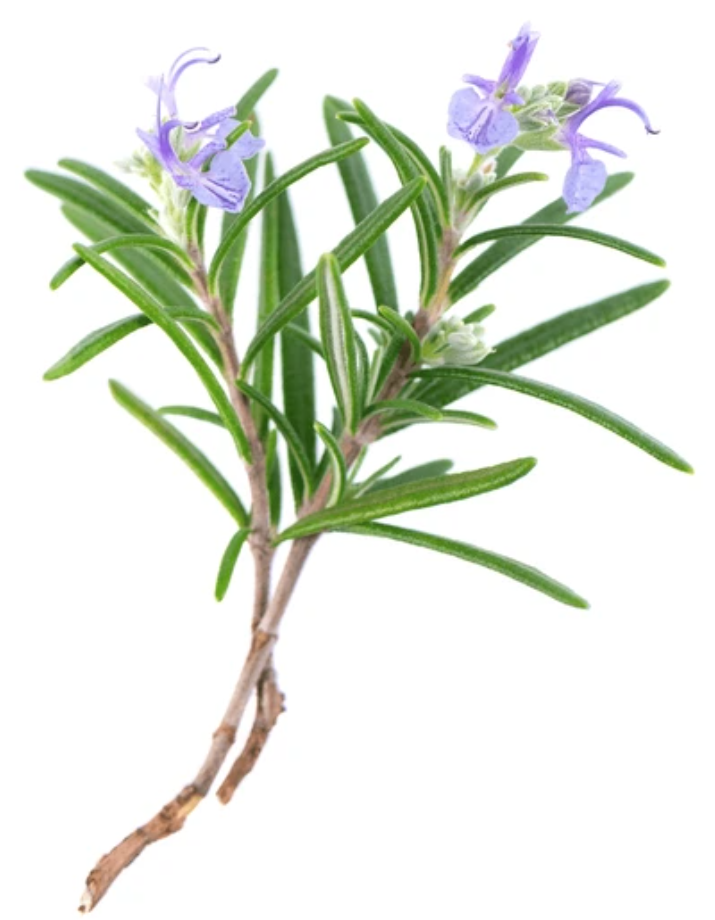
Morphology Evergreen shrub, 0.5 to 2 meters tall, with woody stems bearing very narrow linear leaves, dark green on top, whitish and downy underneath, extremely aromatic. Bilabiate blue-mauve flowers in axillary verticils, highly attractive to bees. Deep rooting allows resistance to Mediterranean drought. Distilled part, chemotypes & origin CT Camphor: Spain (central Spain and coast). CT Verbenone: Corsica and Sardinia, granitic soils. CT 1,8-Cineole: Morocco, Tunisia, PACA region. Steam distillation of the flowering tops. Yield: 0.8 to 2%. |
Salvia rosmarinus Spenn. Characteristic linear aromatic leaves and blue-mauve flowers |
|
The Three Chemotypes & Their Biochemical Profiles |
Three essential oils in one plant: The choice of chemotype determines the therapeutic indication
|
CT Camphor Spain • camphor 15-25% • 1,8-cineole 15-25% Indications: Muscle pain, contractions, cramps, rheumatism, tendinitis, sprains. Stimulates local blood circulation through rubefacient action. Decongestant for overworked muscles. Exclusively external use in healthy adults. Contraindicated in children under 7 years, pregnant women, and epileptics. |
CT Verbenone Depurative chemotype of reference Corsica • verbenone 15-35% • bornyl acetate 10-20% Priority indications: Hepatic drainage and regeneration, steatosis, liver overload, small gallstones, cholesterol regulation, seasonal depurative cures. Mucolytic and skin regenerating. Verbenone is hepatoprotective, promotes hepatic cell regeneration, and is cholagogue. The most versatile and safest chemotype for diluted internal use. |
CT 1,8-Cineole Morocco/Tunisia • 1,8-cineole (eucalyptol) 40-55% Indications: Respiratory infections (bronchitis, sinusitis, rhinitis), powerful expectorant and mucolytic. Remarkable cognitive and memory stimulant: enhances memory performance and concentration. General tonic and anti-fatigue. Best suited for atmospheric diffusion. Also contributes to depuration through mild diuretic action. |
|
Organoleptic Properties |
Sensory characteristics of the essential oil: Common traits of the three chemotypes
|
Appearance Essential oil A fluid and clear liquid. Color: colorless to very pale yellow. CT verbenone may have a slight greenish tint. Absence of sediment in a quality EO. |
Odor Pure and diluted EO Fresh, aromatic, herbal, camphorated, and slightly balsamic. Green and resinous note. CT verbenone is milder and floral; CT cineole is closer to eucalyptus; CT camphor is more pungent. |
Taste Diluted EO - internal use Camphorated, fresh, and slightly pungent, with a persistent herbal aftertaste. CT verbenone, being milder, is best tolerated in diluted internal use (olive oil). |
Olfactory Note Perfumery & Diffusion Aromatic top note, widely used in fougère and chypre masculine perfumery. In diffusion, it tones and purifies the air. Synergistic with lemon and lavender in anti-stress diffusion. |
Density & Solubility Physical characteristics Density: 0.894 to 0.912 g/cm³. Lipid-soluble, dilutes in olive oil, honey, or alcohol. Insoluble in pure water. Rapid cutaneous penetration. |
|
Rosemary EO: Hepatoprotective & Depurative Role |
CT verbenone in the lead, but also CT cineole and CT camphor: Rosemary EO acts on the three emunctory organs
|
Rosemary EO (and particularly CT verbenone) is one of the few essential oils whose hepatoprotective and depurative effects are documented by rigorous pharmacological studies. Its depurative action works simultaneously on the three main emunctory organs: the liver, kidneys, and digestive tract. 1. Hepatic Protection & Regeneration (CT Verbenone) Verbenone is the central molecule of hepatic action. It stimulates bile production by hepatocytes (choleretic action) and facilitates its evacuation into the duodenum (cholagogue action), improving fat digestion and the elimination of liposoluble toxins via the biliary route. It protects hepatocytes from oxidative stress linked to phase I detoxification, and its cell-regenerating action has been confirmed in vitro: verbenone inhibits the activation of hepatic stellate cells, responsible for hepatic fibrosis, thus slowing progression toward steatosis. Bornyl acetate, co-dominant in this chemotype, amplifies the antispasmodic effect on the Oddi sphincter and biliary ducts, facilitating bile flow. 2. Induction of Hepatic Phase II Detoxification Enzymes The oxygenated molecules of rosemary EO (verbenone, 1,8-cineole, alpha-pinene) activate the Nrf2/ARE pathway, the master transcription factor commanding the expression of phase II detoxification enzymes: glutathione S-transferase, UDP-glucuronosyltransferase, sulfotransferases. These enzymes conjugate liposoluble toxins (pollutants, partial heavy metals, drug residues) into water-soluble metabolites that are easily eliminated via bile and urine. This is the fundamental mechanism of deep cellular detoxification — precisely what depurative cures seek to activate. 3. Renal Depuration (CT Cineole + CT Verbenone) 1,8-Cineole and alpha-pinene, present in all three chemotypes (dominant in CT cineole), exert a documented diuretic action by increasing glomerular filtration rate and diuresis. This increased renal elimination promotes the excretion of nitrogenous waste (urea, creatinine), uric acid (preventing gout flare-ups during depurative cures), and water-soluble metabolites from hepatic phase II detoxification. Rosemary EO CT cineole is thus complementary to orthosiphon or dandelion in a depurative formula: the liver converts, the kidneys eliminate. 4. Digestive Tone & Microbiome (All Chemotypes) Monoterpenes and oxygenated compounds of the EO stimulate digestive secretions (gastric juice, bile, pancreatic enzymes), improving the digestion of fats and proteins, often disrupted during depurative cures. The antispasmodic properties reduce bloating, cramps, and digestive discomfort common at the beginning of a cure. Rosemary EO also has an indirect prebiotic action: by reducing the pathogenic load in the intestine (Candida, dysbiosis), it promotes the reimplantation of beneficial bifidobacteria and lactobacilli, an increasingly recognized axis in digestive detoxification. |
| Depurative formula in aromatherapy: Role of rosemary CT verbenone: For a broader formula: Rosemary EO CT verbenone + artichoke (extract) + black radish (extract) + orthosiphon (extract or EO) + dandelion: the five pillars of a complete seasonal depuration. |
|
Rosemary & Hair Health |
From 14th-century Hungary Water to modern clinical studies: Rosemary EO as effective as minoxidil 2%
|
‣ Anti-hair loss and growth stimulation (EO CT 1,8-cineole): A randomized double-blind clinical study (Panahi et al., 2015) demonstrated that applying rosemary EO for 6 months produced statistically equivalent results to minoxidil 2% in the treatment of androgenic alopecia, without the side effects (itching, dry skin) of the reference drug. ‣ Inhibition of 5-alpha-reductase: Monoterpenes in the EO partially inhibit 5-alpha-reductase, the enzyme that converts testosterone into DHT, the androgen responsible for the progressive miniaturization of hair follicles. This mechanism is identical to that of finasteride, without hormonal side effects. ‣ Stimulation of scalp microcirculation: Monoterpenes (alpha-pinene, camphor, cineole) improve oxygen and nutrient supply to hair follicles. Better follicular vascularization is directly correlated with reduced hair loss and denser, more vigorous growth. ‣ Anti-dandruff and strengthening action: Antifungal properties active against Malassezia furfur (dandruff fungus). The antioxidant compounds in the EO protect keratin from external aggression (UV, pollution, heat). Regulation of sebum and soothing of irritated or reactive scalp. |
|
Properties Common to All Three Chemotypes |
Beyond chemotypic specificities: Shared properties that make rosemary a pillar of aromatherapy
|
General Stimulant & Tonic Stimulates the central nervous system and vigilance. Anti-fatigue and mild adaptogen. Improves physical and intellectual performance. Indicated for chronic fatigue, asthenia, overwork, and during periods of exams or intensive work. |
Antioxidant & COX-2 Anti-Inflammatory Inhibits COX-2 and low-grade systemic inflammation. Documented neuroprotective properties. Powerful antioxidant used as a natural food preservative (E392). Protects cell membranes from oxidative stress. |
Antimicrobial & Antiseptic Broad antimicrobial spectrum (Gram+ and Gram- bacteria, fungi). Atmospheric antiseptic in diffusion. Active against Staphylococcus aureus (including MRSA), Candida albicans, and Malassezia furfur. Natural preservative for cosmetic preparations. |
Circulatory & Capillary Stimulates skin and scalp microcirculation. Clinical study 2015: equivalence to minoxidil 2% after 6 months on androgenic alopecia. Inhibits 5-alpha-reductase (DHT reduction). Strengthens hair follicles and stimulates growth. |
| Usage notes & precautions by chemotype: CT Camphor is neurotoxic and abortifacient — external use only in healthy adults, contraindicated in pregnancy, breastfeeding, epilepsy, and children under 7 years. CT Verbenone is the most indicated for internal depurative use: must be diluted (1 to 2 drops in olive oil), do not exceed 3 consecutive weeks, avoid in pregnant women and infants. CT 1,8-Cineole is the safest overall: not recommended for infants and severe asthmatics only. Never instill any chemotype into the nostrils of children. Always verify and specify the chemotype before use. |
| Rosemary CT verbenone is the only essential oil that simultaneously combines activation of hepatic phase II detoxification enzymes (Nrf2 pathway), direct choleretic and cholagogue action, renal depuration through monoterpene diuresis, and capillary anti-hair loss stimulation through 5-alpha-reductase inhibition, making rosemary the essential cornerstone of any seasonal depurative formula in aromatherapy. |
Essential oils are concentrated products. Consult a healthcare professional before use, especially in cases of pregnancy, breastfeeding, epilepsy, or for children. Always verify the chemotype before use.