


|
Standardized Plant Extract - TITREX® DandelionLion's tooth - Meadow gold, total drainer, and liver tonic |
Latin name Taraxacum officinale Weber ex F.H.Wigg. Family Asteraceae |
|
History & Botany |
From Eurasia to the world : the "weed" that heals better than many remedies
|
Dandelion is native to Eurasia but has spread across all continents, colonizing meadows, gardens, roadsides, and uncultivated areas with remarkable vigor. Its Latin name, Taraxacum, derives from the Greek taraxos (disorder) and akos (remedy), perfectly summarizing its therapeutic vocation. Its French nickname, "pissenlit," dates back to the 15th century and directly reflects its well-known diuretic properties. In English, it is called "dandelion" (lion's tooth), referring to its characteristic toothed leaves. Described since ancient Greece and mentioned in the writings of Ibn Sina (Avicenna) around the year 1000, it entered the first European medieval pharmacopoeias in the 16th century for its hepatobiliary and renal properties. A total food plant (leaves, flowers, and roots are all edible and medicinal), it is also valuable in biodynamic agriculture: its dried flowers are used in Rudolf Steiner's BD 506 preparation to vitalize composts. Today, it is recognized by the EMA, ESCOP, and listed in the European Pharmacopoeia. |
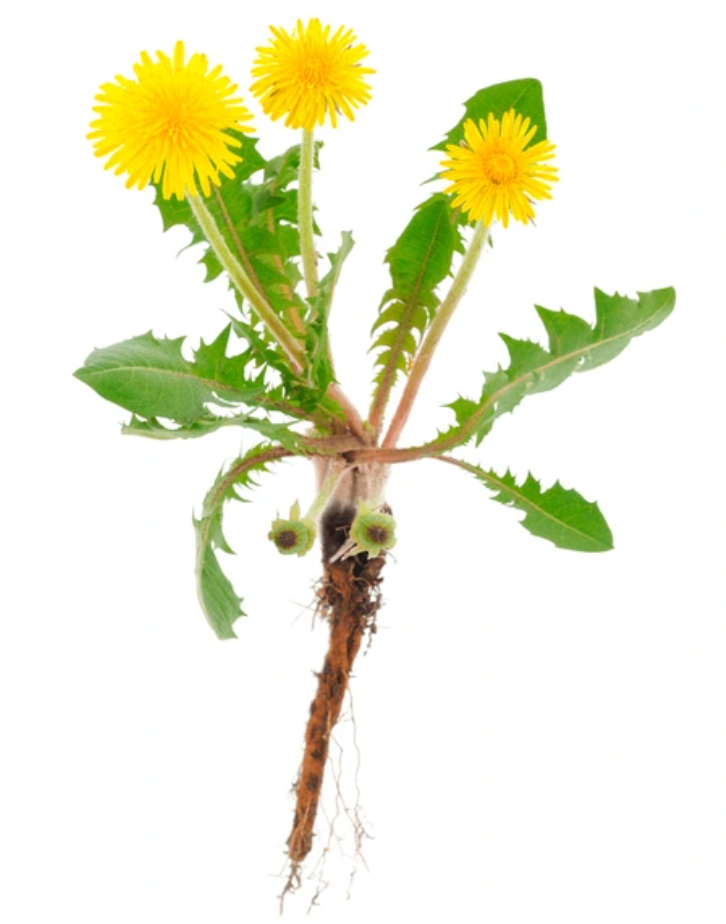
Morphology Perennial plant with a rosette of deeply toothed basal leaves (hence "lion's tooth"). Bright yellow flowers in solitary capitula borne on a hollow, milky stem. Fruits: achenes with a silky pappus forming the famous "clock of the shepherd." Long, fleshy taproot, dark brown on the outside, white and milky on the inside, with a characteristic bitter taste. Parts used Leaves (spring, rich in minerals and diuretics) and roots (autumn, richer in inulin and bitter principles, choleretic and cholagogue). Both parts are complementary and often combined in high-quality total extracts. |
Taraxacum officinale Weber Characteristic toothed leaves and bright yellow capitulum with taproot |
|
Organoleptic Characteristics |
What the senses reveal about the plant
|
Appearance Deeply toothed green leaves; dark brown root, milky white latex when cut. Extract powder ranges from yellow-brown to dark brown depending on the part used (leaf or root). |
Odor Slightly herbal and milky, not pronounced in the leaves. The root develops a more earthy and slightly bitter odor, characteristic of bitter plants in the Asteraceae family. |
Taste Frankly bitter (bitter tonic), slightly salty. Spring leaves are less bitter. Autumn root is the most bitter and most active. Slightly sweet aftertaste due to inulin. |
Infusion Clear light golden-yellow liquid (leaves) to amber-brown (root), slightly cloudy. Persistent bitter taste, pleasantly vegetal. Often combined with chicory or roasted dandelion. |
|
Active Principles & Biochemistry |
A complete chemistry for total efficacy : leaves and roots acting in synergy
| Bitter principles (taraxacin, taraxacerin) | Characteristic bitter sesquiterpene lactones of the Asteraceae family. Powerful digestive and hepatobiliary tonics. Stimulate gastric, biliary, and pancreatic secretions. Choleretic properties (increase bile production) and cholagogue (facilitate bile evacuation). Documented anti-inflammatory and antioxidant activity. Quality markers of TITREX® dandelion. |
| Inulin (root, up to 40%) | Major prebiotic fructan, concentrated in autumn. Slows carbohydrate absorption and regulates postprandial glycemia. Supports the intestinal microbiota (bifidobacteria and lactobacilli). Mild hypocholesterolemic properties. Preferred energy source for beneficial colon bacteria — growing interest in preventing intestinal dysbiosis. |
| Flavonoids & phenolic acids | Luteolin, quercetin, chicoric, and chlorogenic acids. Powerful antioxidants neutralizing hepatic free radicals. Anti-inflammatory (COX-2 inhibition). Inhibit pancreatic enzymes linked to fat digestion. Confirmed hepatoprotective properties on hepatocytes in vitro. Chlorogenic acid participates in glycemic control. |
| Minerals & vitamins (leaves) | Abundant potassium (compensates for urinary losses during diuretic effect — unique advantage over chemical diuretics), calcium, magnesium, iron, zinc, manganese, selenium. Vitamins A (beta-carotene, one of the richest plant sources), C, K, E, B1, B2, B6, and folic acid (B9). Nutritional content superior to most cultivated vegetables. |
| Phytosterols & triterpenes | Taraxol, taraxasterol, beta-sitosterol, and stigmasterol. Anti-inflammatory, hepatoprotective, and mildly hypocholesterolemic properties. Contribute to the protection of the intestinal wall and the inhibition of dietary cholesterol absorption. |
|
Medicinal Properties & Traditional Use |
Recognized by the EMA, ESCOP, and listed in the European Pharmacopoeia
|
Hepatobiliary & Digestive Drainer The root stimulates bile production and evacuation. Relieves hepatic congestion, biliary insufficiency, and small gallstones. Valuable bitter tonic for revitalizing a sluggish liver after dietary excess, alcohol, or medication. Improves appetite and reduces intestinal fermentation. |
Diuretic & Depurative The leaves are powerful diuretics without potassium depletion (naturally contained in the plant) — a major advantage over chemical diuretics. Eliminate uric acid, toxins, and nitrogenous waste. Traditional use for gout, rheumatism, water retention, and dermatoses. |
Metabolic Regulator & Prebiotic Prebiotic inulin and flavonoids modulate lipid and glucose metabolism. Mild hypocholesterolemic and hypoglycemic properties. Supports the intestinal microbiota. Useful in metabolic syndromes, mild dyslipidemia, and prevention of type 2 diabetes. |
Hepatoprotective & Antioxidant Flavonoids and phytosterols protect hepatocytes against toxic aggression (alcohol, drugs, pollutants). Supports liver regeneration during detoxification cures. Growing interest in complementary management of non-alcoholic fatty liver disease (NASH). |
| Usage note: Contraindicated in cases of biliary tract obstruction, large gallstones, or allergy to Asteraceae (dandelion, chrysanthemum, chamomile). Caution when taking diuretic or anticoagulant medications (vitamin K content in leaves). Well tolerated at recommended doses. Drainage cures combining leaves and roots are generally 3 weeks per month, renewable according to the season. |
| The EMA and ESCOP recognize the use of dandelion leaves as a diuretic and roots as choleretic and cholagogue for mild digestive and hepatobiliary disorders — making dandelion one of the few plants with dual official recognized indications. |
TITREX® products are dietary supplements and not medicines. They should not replace a healthy and balanced diet.