


|
Standardized Plant Extract - TITREX® ArtichokeThe liver flower: Reference choleretic and hepatoprotective |
Latin name Cynara scolymus L. Family Asteraceae |
|
History & Botany |
From the Mediterranean basin to tables and pharmacies worldwide
|
Artichoke is a perennial plant native to the Mediterranean basin, probably derived from the wild cardoon of North Africa, cultivated and consumed since antiquity. Its name comes from the Arabic harsufa, then the Italian articiocco. Dioscorides and Pliny the Elder already described its medicinal virtues. In the Middle Ages, cultivated in monastery gardens for its digestive properties, it became a prestige vegetable in France in the 16th century, introduced by Catherine de' Medici. Modern phytotherapy carefully distinguishes the edible vegetable (immature floral head) from the medicinal plant (the large true leaves). The latter, deeply divided, concentrate cynarin and active flavonoids. The isolation of cynarin dates back to the 1950s; since then, more than 12 clinical studies have confirmed its hepatobiliary efficacy. The EMA and EFSA officially recognize its benefits. |
Morphology Robust plant, 1.50 to 2 meters tall, with branched stems and deeply divided leaves of a very characteristic silver-gray-green color. Globular floral heads formed of fleshy bracts (the edible vegetable). Spectacular purple flowers if the plant is allowed to bloom. Same family as milk thistle, daisy, and sunflower. Part used & extraction The true leaves (not the bracts of the head), harvested before flowering, dried at low temperature, and extracted via hydro-alcoholic extraction. Extracts standardized to minimum 5% cynarin (EMA/EFSA standard) to guarantee choleretic efficacy. Main producers: France, Spain, Italy, Morocco. |
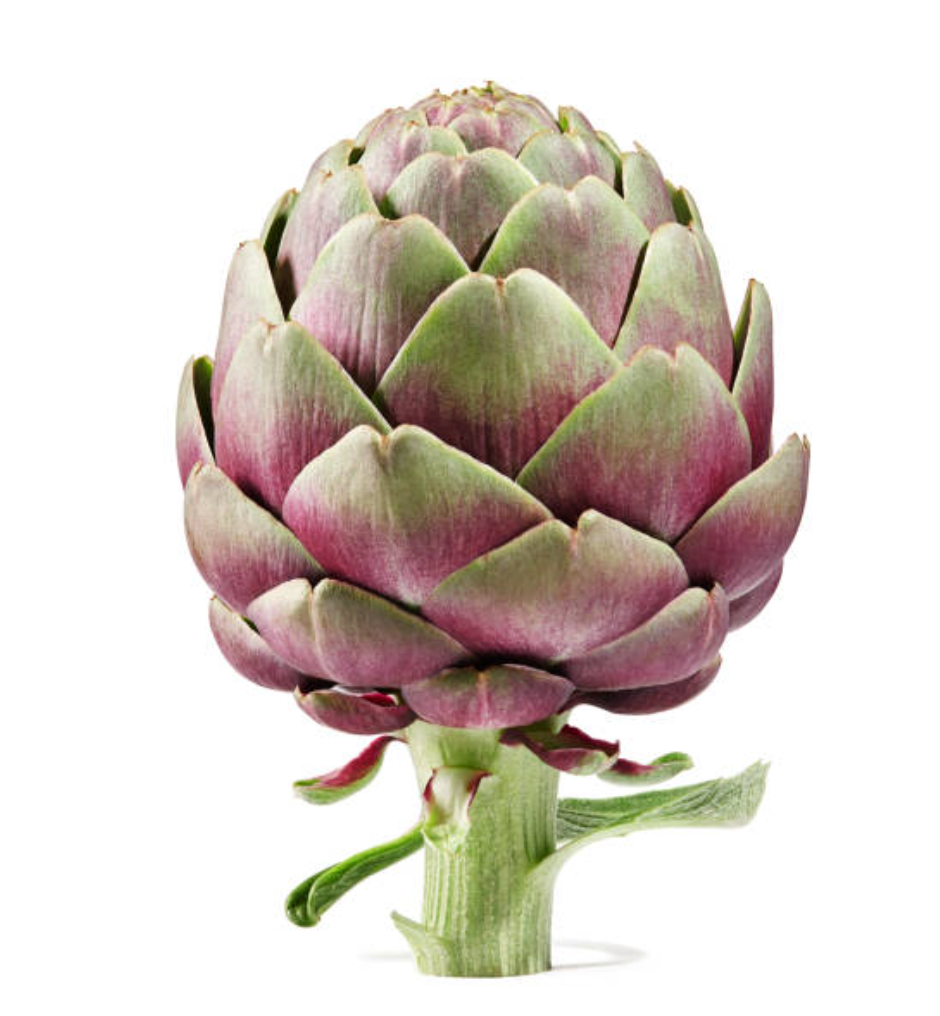
Cynara scolymus L. Floral head before blooming and characteristic large silver-gray-green leaves |
|
Organoleptic Characteristics |
What the senses reveal about the plant
|
Appearance Large leaves, silver-gray-green, deeply divided, and leathery. Dry extract powder, greenish-brown to dark brown depending on concentration, fine and homogeneous. |
Odor Slightly vegetal and herbal, subtle and pleasant. Fresh leaves release a more pronounced, slightly camphorated note. The dry extract is almost odorless. |
Taste Bitter and slightly astringent, a direct signature of cynarin. Unique phenomenon: after consuming artichoke, water and food seem sweet (inhibition of bitter taste receptors). |
Extract Powder, greenish-brown to dark brown depending on concentration. Good hydroalcoholic solubility. Liquid extracts have a characteristic amber-brown color. |
|
Active Principles & Biochemistry |
Cynarin : Unique phenolic acid, quality marker, and key to hepatobiliary action
| Cynarin (1,3-dicaffeoylquinic acid) (standardization marker: min. 5%) | Major active principle and absolute quality marker. Phenolic acid with dual hepatobiliary action: choleretic (stimulates bile production by the liver) and cholagogue (promotes its evacuation into the intestine). Hepatoprotective: protects liver cells against toxins, alcohol, and oxidants. Documented reduction of LDL cholesterol and triglycerides in controlled clinical studies. |
| Chlorogenic acid & caffeic acid | Complementary phenolic acids with powerful antioxidant properties (neutralization of hepatic free radicals). Inhibit lipid peroxidation of hepatocyte membranes. Actively support and accelerate liver cell regeneration after toxic aggression. Complementary hypoglycemic properties of chlorogenic acid. |
| Flavonoids (luteolin & derivatives) | Powerful antioxidants and anti-inflammatory agents (COX-2 and NF-kB inhibition). Luteolin inhibits HMG-CoA reductase (key enzyme in endogenous cholesterol synthesis), complementary to statins. Synergistic with cynarin for overall hepatoprotective action. Emerging anti-fibrotic activity. |
| Inulin & fructo-oligosaccharides | Prebiotic fructan present in leaves and stems. Slows the absorption of dietary carbohydrates and lipids. Supports the intestinal microbiota (bifidobacteria, lactobacilli) and contributes to overall digestive comfort. Complementary mild hypoglycemic properties to cynarin. |
|
Medicinal Properties & Traditional Use |
Recognized by the EMA & EFSA: Efficacy confirmed by more than 12 clinical studies
|
Choleretic & Hepatoprotective Stimulates the secretion and evacuation of bile, a well-established EMA indication. Protects hepatocytes against toxins, alcohol, and hepatotoxic drugs. Actively supports liver regeneration. Recommended for seasonal detox cures and after dietary excesses. |
Digestive & Functional Dyspepsia Relieves abdominal heaviness, slow digestion, postprandial bloating, and nausea. Validated efficacy for functional dyspepsia by several clinical studies (including Holtmann et al.). Improves transit thanks to prebiotic inulin and reduces interest in irritable bowel syndrome. |
Lipid Regulator Reduces LDL cholesterol and blood triglycerides in 4 to 8 weeks of treatment. Luteolin inhibits endogenous cholesterol synthesis. Documented interest in metabolic syndrome and preventive cardiovascular follow-up. Synergistic with a balanced diet. |
Antioxidant & Cardioprotective All the polyphenols in the leaf (cynarin, chlorogenic acid, luteolin) protect the vascular endothelium against LDL oxidation and early atherosclerosis. Reduces C-reactive protein (marker of cardiovascular inflammation) in recent clinical studies. |
| Usage note: Standardized extracts with minimum 5% cynarin, 300 to 600 mg per day in 2 to 3 doses before meals. Well tolerated at recommended doses. Contraindicated in cases of biliary obstruction (common bile duct lithiasis, cholangitis) and allergy to Asteraceae (artichoke, daisy, chrysanthemum, milk thistle, arnica). Possible mild laxative effect at the beginning of the cure. Not recommended during pregnancy and breastfeeding (insufficient data). |
| The EFSA authorizes communication on the hepatic benefits and detoxification for artichoke extracts standardized to 5% cynarin. The EMA recognizes the well-established traditional use for dyspeptic disorders, difficult digestion, and mild hepatobiliary disturbances, making artichoke one of the few plants to benefit from dual European recognition by EMA and EFSA. |
TITREX® products are dietary supplements and not medicines. They should not replace a healthy and balanced diet.