


|
Vegetable Oil - Female Phytotherapy & Cosmetics Evening Primrose OilThe evening primrose: GLA, female cycle, PMS, and menopause |
Latin name Oenothera biennis L. Family Onagraceae |
|
History & Botany |
From North American meadows to pharmacies worldwide: The evening flower that revolutionized women's health
|
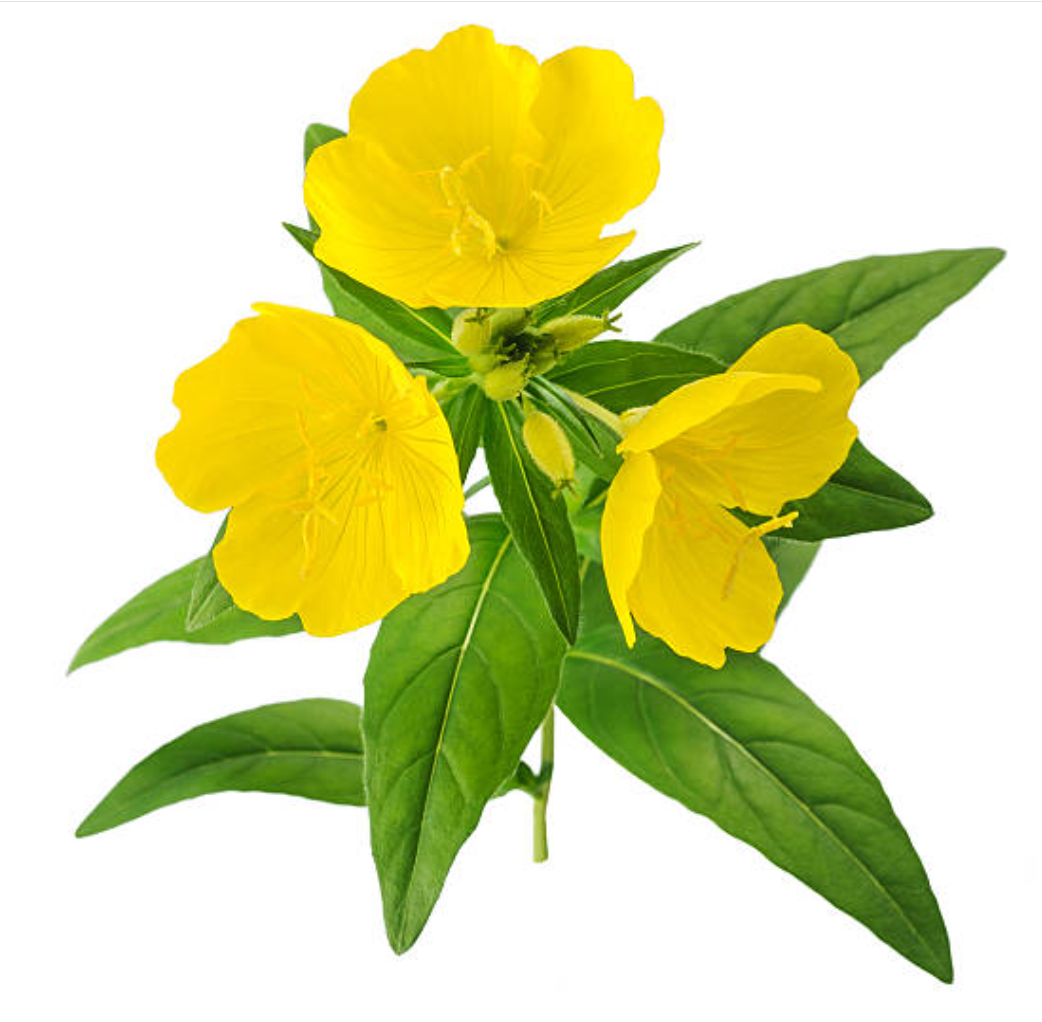
Evening primrose is a biennial plant native to North America, where Native American peoples used all its parts. Introduced to Europe in the 17th century as an ornamental plant, its large sulfur-yellow flowers bloom in the late afternoon (hence its English name, Evening Primrose), and close in the morning, offering their nectar only to nocturnal butterflies and hawk moths. The real revolution came in the 1970s-1980s, when British researchers discovered the exceptional richness of its seeds in gamma-linolenic acid (GLA). Evening primrose oil became, within a few years, one of the best-selling dietary supplements in the world, particularly in the United Kingdom, where it received medicinal authorization for atopic eczema and mastodynia. |
Morphology Large biennial plant, 50 to 150 cm tall, upright and robust. Large bright yellow flowers with 4 petals, solitary or in terminal clusters, opening in the late afternoon. Elongated capsules containing numerous small brown seeds. The entire plant emits a slight lemon scent when crushed. Oil extraction Extraction by cold first pressing of mature seeds, without solvents. Low yield (15 to 20%), making it an expensive oil. Pale golden yellow color, light, with a fine and subtle odor. Mandatory refrigeration, away from light and air. |
Oenothera biennis L. Large bright yellow flowers blooming in the late afternoon |
|
Fatty Acid Composition & Biochemistry |
The omega-6 oil most clinically documented in women's health: GLA and linoleic acid in perfect complementarity
| Gamma-linolenic acid - GLA (8 to 12%) | Signature molecule and main therapeutic justification. Direct precursor of series 1 prostaglandins (PGE1), which are anti-inflammatory and hormone-regulating. Bypasses delta-6-desaturase, which is often deficient in many women suffering from PMS, eczema, or chronic inflammation. Over 200 published studies. |
| Linoleic acid - LA (65 to 80%) | Essential omega-6 in dominant proportion. Major structural component of cell membranes and the skin's hydrolipidic film. Its high proportion makes evening primrose oil particularly effective for dry skin and deficient skin barriers in atopic skin. |
| Oleic & palmitic acids | Oleic acid (6-10%): Penetrating and restructuring, improves membrane fluidity. Palmitic acid (5-8%): Saturated fatty acid that stabilizes and contributes to the integrity of the skin's stratum corneum. |
| Tocopherols & phytosterols | Natural vitamin E antioxidant that protects PUFAs from oxidation. Phytosterols (beta-sitosterol) with anti-inflammatory properties and hormone receptor modulating effects. Traces of vitamin C in high-quality fresh oil. |
|
Organoleptic Properties |
Sensory characteristics of virgin oil : identification and quality benchmarks
|
Appearance Virgin oil A fluid, clear oil, light, non-greasy to the touch. Rapid skin penetration. Slightly viscous when cold, more fluid at room temperature. |
Color Fresh virgin oil Pale golden yellow to light yellow. A color that is too dark (brown-orange) or cloudy indicates advanced oxidation or insufficient quality. |
Odor Fresh oil Fine and subtle, slightly vegetal and lemony. A rancid or strong fishy odor indicates oxidation: the oil should not be consumed. |
Taste Oil in solution / capsule Mild and slightly vegetal, without marked bitterness. Very slightly fatty and lemony note. Neutral taste in gastro-resistant capsules. |
Storage Oxidative stability A fragile oil sensitive to oxidation (dominant PUFAs). Mandatory refrigeration, away from light. Adding vitamin E is recommended for stabilization. Shelf life: 6 to 12 months once opened. |
|
Medicinal Properties & Use in Women |
The quintessential women's oil: PMS, mastodynia, menopause, skin, and endometriosis
|
PMS & Mastodynia Best-documented indication. Clinically proven to reduce cyclic mastodynia (painful and tense breasts before menstruation). Alleviates irritability, water retention, bloating, and premenstrual migraines. Optimal results after 2 to 3 cycles of continuous treatment. |
Menopause & Vaginal Dryness GLA reduces the intensity and frequency of hot flashes. Improves vaginal dryness through oral intake and topical application. Supports the trophicity of genital mucous membranes during postmenopausal atrophy, complementary to phytoestrogens. |
Eczema & Atopic Skin Former medicinal indication in the United Kingdom. Reduces itching, redness, and dryness in atopic eczema. Restores the deficient skin barrier in ceramides. Used in topical application and orally, with a synergistic effect between the two routes of administration. |
Endometriosis & Pelvic Inflammation GLA, a precursor of anti-inflammatory PGE1, helps reduce chronic pelvic inflammation in endometriosis. Alleviates severe menstrual pain and reduces pro-inflammatory prostaglandins PGE2 responsible for uterine cramps. |
| Usage note: Typical oral dose: 3 to 4 g/day of evening primrose oil (or 240 to 480 mg of GLA). Choose capsules standardized in GLA with added vitamin E to prevent oxidation. Borage may be preferred when a higher dose of GLA is desired. Not recommended under anticoagulants at high doses. Generally well tolerated at recommended doses. Pregnancy: Medical advice recommended. Onset of action: 4 to 12 weeks depending on the indication. |
| With over 200 published clinical studies, evening primrose oil is the most scientifically documented vegetable oil for women's indications: PMS, mastodynia, and atopic eczema at the forefront. |
Vegetable oils are concentrated natural products. Consult a healthcare professional before internal use, especially in cases of pregnancy, breastfeeding, or medication.